


Left rectangle ads redesigned


Robert Ripps book

History of Tribeca Buildings
The Warren Street Hotel wants to add another floor to its roof
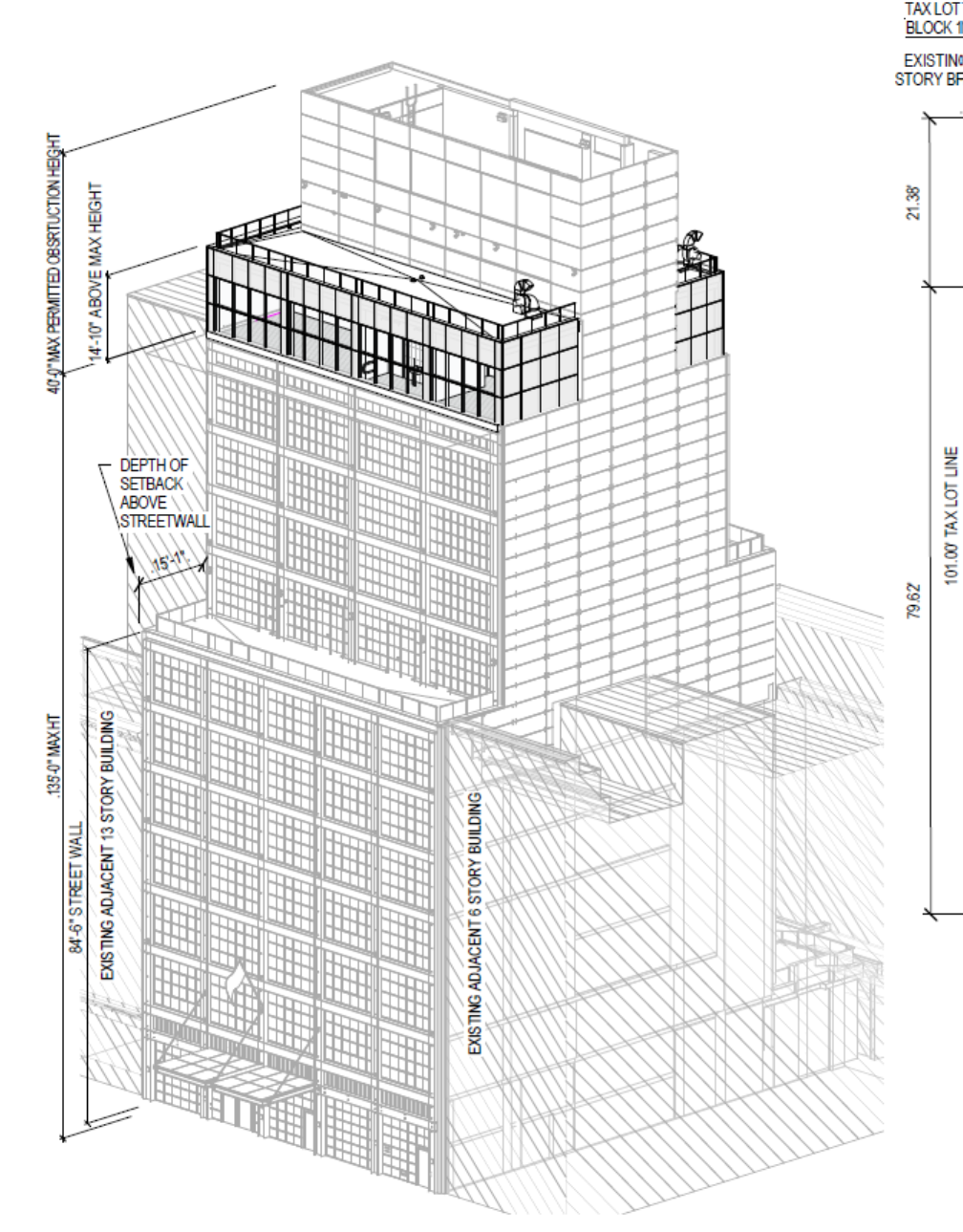
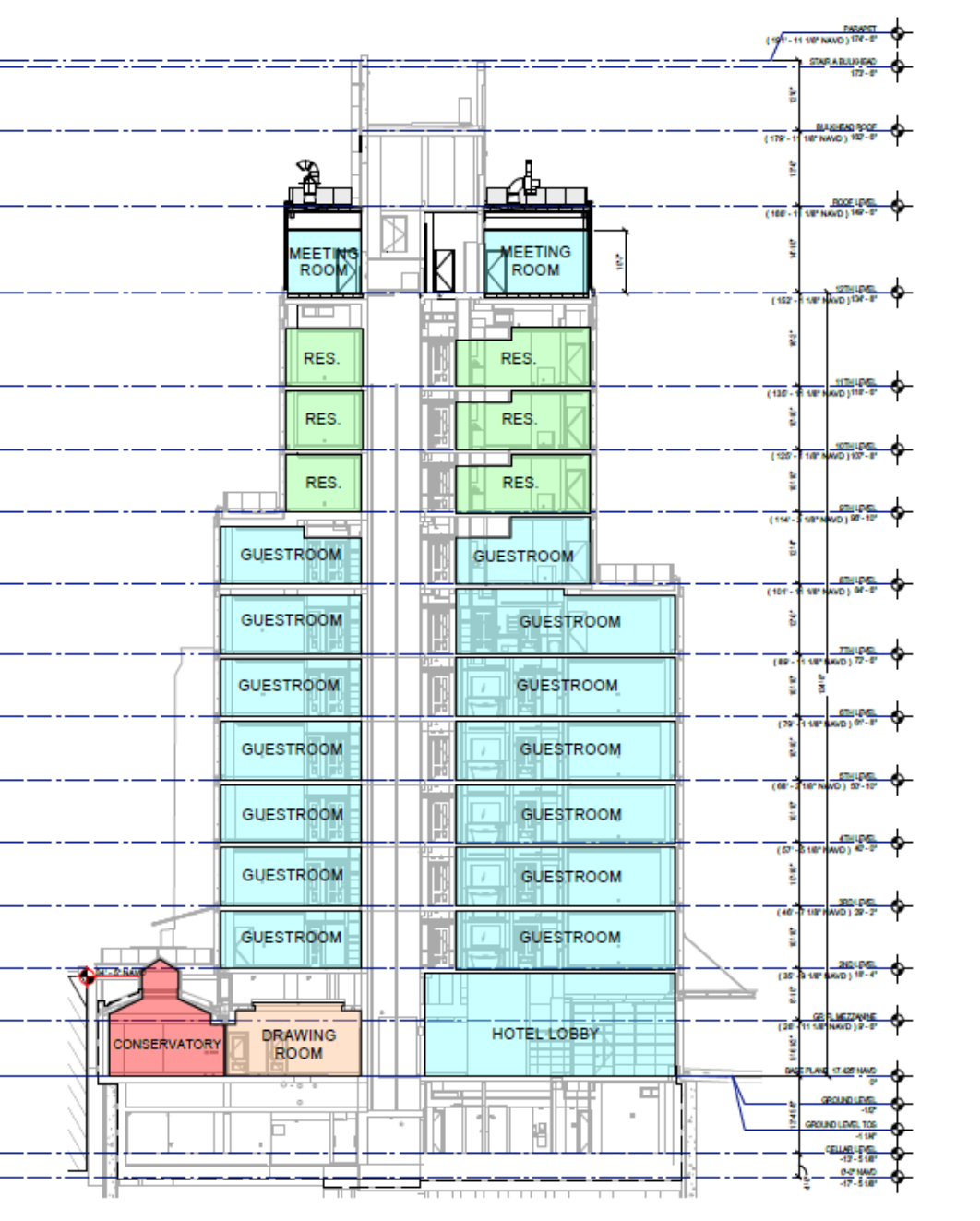
The Warren Street Hotel has applied to the city for a variance to add an extra 2900 square feet of space on the roof, surrounding the current mechanicals, to accommodate more residences, a fitness center and screening rooms — a plan that was rejected by the Department of Buildings in July but now being brought before the Board of Standards and Appeals.
Meanwhile, their neighbor immediately to the east, the coop board of 80 Warren Street, is still seeking repairs for damages caused by the hotel, whose excavation between March 2020 and March 2021 undermined the building and left individual apartments with cracks in walls and ceilings and water damage. The hotel made initial repairs, the coop members said, such as repairing some cracks and holes in the building walls and shoring up the coop’s western facade, but water damage from the hotel’s staging on the building’s roof and cracks remain.
“The hotel group and contractor are contractually obligated to make repairs, and we are weighing our options regarding as-yet-unrepaired damages our building suffered during construction,” the coop board said.
This is a cautionary tale for all our 19th and early 20th Century buildings next to construction sites, and we have a good number of those, so I will start from the beginning. (Also, The Broadsheet had this story first; I caught up with the documents from the BSA. CB1’s Land Use Committee will hear this in November.)
The project at 86 Warren started excavation in March 2020, following plans to dig down 52 feet, a good 30 feet below the foundations of all seven surrounding buildings: 80 and 92 Warren, as well as 162 – 154 Chambers (this all according to the hotel’s own Statement of Facts and Findings submitted by its lawyer to the BSA last month). The hotel’s engineers discovered there was no bedrock beneath the site, even at 112’ depth, meaning “any deep cellar required extensive shoring in very poor soils.” They also measured groundwater below the sidewalk level at about 18-20 feet. “In addition to the building movement, water penetration was evident in the 80 Warren Street cellar and minor cracks were visible in their apartment walls,” the hotel’s documents say.
“The Applicant’s engineer’s understood that the proposed plan’s deep foundation would require dewatering, underpinning, SOE installation and special attention (i.e. monitoring) to settlements and/or lateral movements of adjacent buildings, particularly these older adjacent structures,” the documents read.
So when 80 Warren’s structural monitors started to show movement beyond the agreed-upon thresholds, and cracks appeared in apartment walls and water in its basement, construction was halted. The hotel’s contractors then installed 40 ties to the building to stabilize its outer wall, yet movement continued. The hotel’s plans for three levels of subcellars were then scrapped and new plans submitted for one subcellar only.
Construction then continued with the revised plan and the hotel opened in February 2024 with 69 rooms and 12 residential units on the top floors. (A quick glance at room rates for mid-week in mid-November put the cheapest room at $1100.)
The hotel initially made some repairs in 2021, the coop said, but never finished repairing damages caused by the initial excavation four years ago, and then later by the hotel’s staging on the roof.
In its filings with the BSA, the hotel’s lawyer claims in its own economic analysis that the hotel’s annual return is a *negative* 31 percent as a percentage of cost — it cost $86 million to build and its value, they claim, is $59 million. With the added spaces on the roof, the value would increase to $90 million. The reason? The entertainment component that is most important to its financial viability — screening rooms, meeting rooms, a fitness center, “spaces that are universally expected from hotels” — was supposed to be in the cellar, and when the excavation failed, that left the hotel in the lurch.
The increase in floor area would bring the hotel’s total mass to 10,967 square feet of residential floor area and 46,462 square feet of commercial floor area.
“Absence of these spaces demonstrably reduces competitiveness, guest satisfaction, and rates,” the documents say. “Without relief, the hotel’s ability to operate as a viable hotel is severely constrained.”
4 Comments
Comment:
Medium rectangle #1 (top)

Right column rectangle ads



Restaurant guide icon


The hotel and their lawyer are being entirely disingenuous. No one told them to select a hotel site–one that depended on excavating three (3) subcellars–less than 200 feet away from the year 1776 (pre-landfill) shoreline of the Hudson River. This was a terrible idea and a poor gamble on what was obviously unsuitable underground conditions for this project.
Moving ahead and expecting to excavate three subcellars adjacent to several inhabited 19th century structures was not only foolhardy but downright idiotic.
To then say your project’s entire economic viability relied on this totally (with complete foresight) knowable fact, and that you either were ignorant of the data and the reality and the warnings, is inexcusably arrogant and said in bad faith. These lies should not be rewarded.
I wonder what the occupancy rate is. When I walk by, which isn’t that often, there appears to be little activity in the lobby.
Yes, but how much would the added floor cost to build? A figure of 4 million or less would put them at a break-even point. Their argument doesn’t make sense from a financial standpoint.
Unless they plan on selling it (which may be their goal, since it always appears empty), otherwise, why would they invest more money into a sinking ship? (pun intended)
That’s exactly right. The analysis shows them at break even for value.