


Left rectangle ads redesigned


Robert Ripps book
History of Tribeca Buildings
In the News: Are you a true New Yorker?
ARE YOU A TRUE NEW YORKER?
Knowing what Tribeca stands for gives us all a leg up on the Times’ True New Yorker quiz, but it didn’t help me with the pronunciation of Kosciuszko. I got a 19/25 (making me a “bonafide” NYer) with dings for the old nickname for Soho, the Village cafe that hosted Bob Dylan on occasion, and the number of languages spoken in Jackson Heights. Good luck!
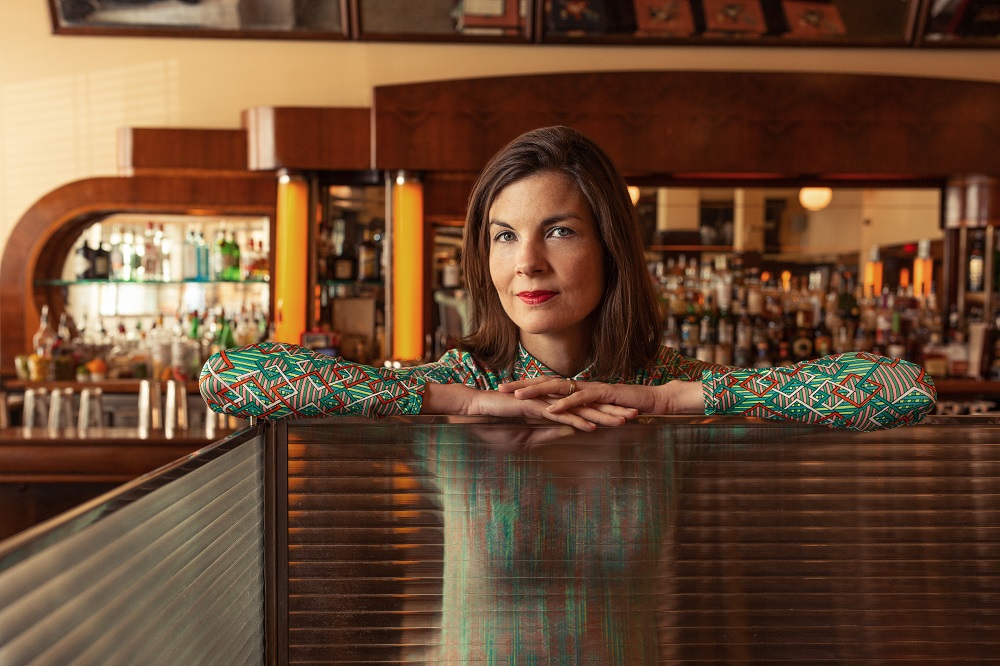
Photo by Claudine Williams
THE WORLD ACCORDING TO ROYA
Longtime Odeon maître d’ Roya Shanks is profiled in Cultured magazine, noting that she “moves through the room with the precision and warmth of her mandate, keeping the eatery alive long after last call.” They go on: “At the core of her approach is a simple credo: ‘People really just want to be listened to,’ she says. ‘Don’t approach everything with the attitude that you’re right or that you’re going to bend them.’ It’s a principle that has carried her through flustered encounters, well-coiffed crowds, and the changing faces of the neighborhood.” And it’s good advice for our times!!
SUBSIDIZING FILM SHOOTS IN NYC
The Post has a story that analyzes subsidies for the film & TV industry, claiming that “New York taxpayers are on pace to pump almost a billion dollars into lavish subsidies for television and film productions this year to keep them in town.” It goes on: “Productions such as ‘Saturday Night Live’ and ‘FBI Most Wanted’ sucked up around $21 million in tax credits each in just the first three months of 2025, part of a total whopping $230 million that New York shelled out for the industry for the same period, according to a new report from the good-government group Reinvent Albany. That’s around $65,000 for each job created by the productions for the quarter, Reinvent said.”
HERE COME THE URBAN COUNTRY CLUBS
New York magazine has a feature on the emergence of urban country clubs, including Cocoon on Greenwich. This from Curbed: “Karl Chong is the co-founder of Cocoon, a members-only play space full of natural wood and Montessori-inspired climbing structures that opened in Tribeca in 2020 and recently added a second location on the Upper West Side. He says he and his business partners were also looking to provide parents with a way to connect and build friendships that doesn’t involve awkwardly asking for a number at a playground or on the last day of a parent-child class.”
3 Comments
Comment:
Medium rectangle #1 (top)

Right column rectangle ads



Restaurant guide icon


Hell’s Hundred Acres first in print:
The New York Times, November 22, 1960
“VIOLATIONS FOUND BEFORE LOFT FIRE
Cavanagh Checks on Failure to Follow Up in Building Where 3 Were Killed WIDE SURVEY TO START 50 Teams of Firemen Will Study 3,000 Structures in Lower Manhatttan”
“Fire Commissioner Edward F. Cavanagh Jr. said yesterday that inspections made almost two years ago showed major fire hazards in the lower Manhattan loft building [463-67 Broadway] where three firemen lost their lives in a fire Friday night. […]
“Meanwhile, Commissioner Cavanagh said, he would have fifty inspection teams working on an intensified survey of the area in which the loft fire occurred. The work will start today or tomorrow.
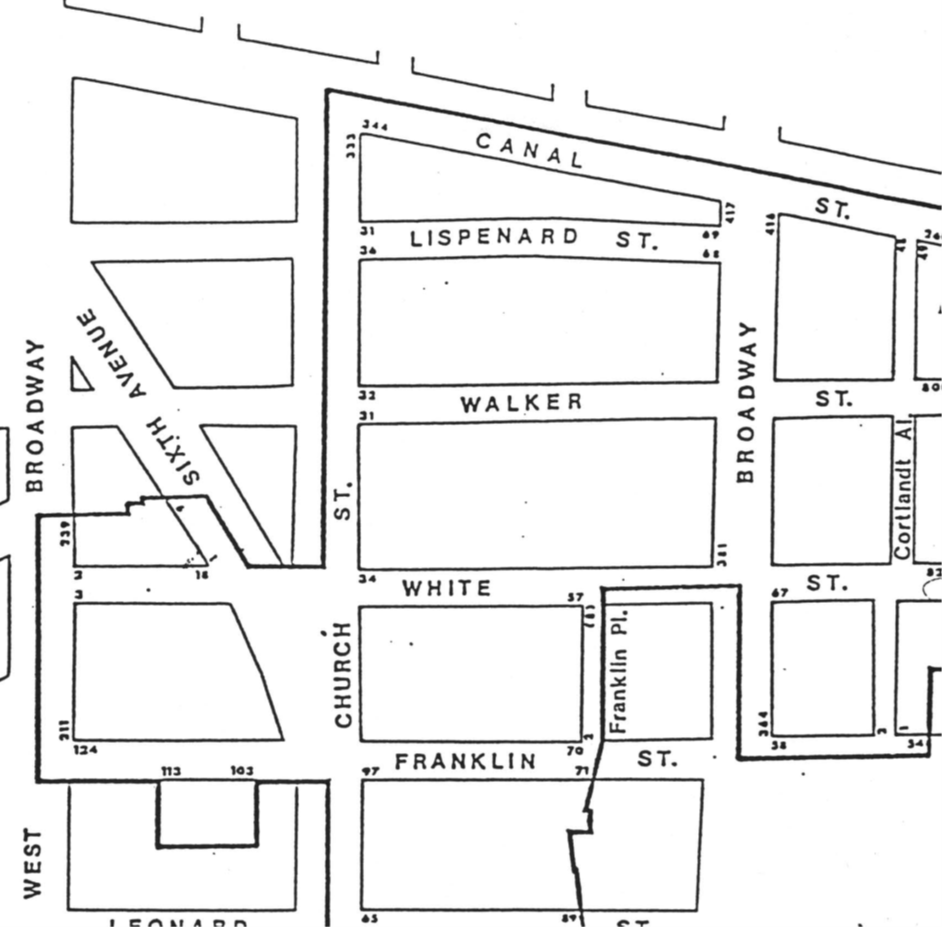
“Describing the area as ‘Hell’s Hundred Acres,’ he gave its boundaries as Reade and Eighth Streets, between Broadway and the Hudson River. Of the 3,000 old buildings in the area, Commissioner Cavanagh said, he expects to close a ‘couple of hundred.’ […]”
https://www.nytimes.com/1960/11/22/archives/violations-found-before-loft-fire-cavanagh-checks-on-failure-to.html
The “boundaries” changed over time, per the Times.
March 25, 1961: “And yesterday, the present Fire Commissioner, Cavanagh, echoed the warning: ”Fifty years or fifty decades will not dim the horror or tragedy of fire. The shadow of another Triangle fire continues to hang over that area. In recent years there have been three major fires in the area, which have cost the lives of firemen and workers. I am determined to prosecute every law and regulation of the Fire Department to bring about the greatest degree of fire prevention possible in that area. I have designated it as ‘Hell’s Hundred Acres,’ and I will so call it until I am satisfied that every possible step to minimize the fire threat has been taken.” ”
Ada Louise Huxtable, May 24, 1970: “THE subject today is an area called SoHo, a 20‐ block section of lower Manhattan bounded roughly, north and south, by Houston and Canal Streets, and east and west, by Broad way and West Broadway.
“SoHo stands for South Houston, and it is in the news right now because artists living and working there illegally have been publicizing their plight — caught between the harassment of city agencies and the mercies of their landlords, in one of the last stands of superb, reasonably priced, increasingly scarce loft space that the city offers. They are there illegally because the area is zoned commercially, not residentially, and most of the buildings are occupied by small industries. The artists, and some galleries, have recently moved in. […]
“It has still another name, Hell’s Hundred Acres, be stowed on it by a Fire Department of unsuspected literary flair, after several disastrous conflagrations. These were not caused by the buildings’ age or instability, as claimed, for they are extra ordinarily sound, but by violations and bad housekeeping habits of some of the district’s waste industries. […]”
June 19, 1986: “EDWARD CAVANAGH JR. DIES; FORMER FIRE COMMISSIONER”
“[…]Assistant Fire Commissioner John Mulligan said yesterday, ‘Commissioner Cavanagh is remembered by many present and past firefighters as the Commissioner who reorganized and modernized the Fire Department during his eight-year tenure as Fire Commissioner.’
“A Phrase-Maker
“Mr. Mulligan noted that Mr. Cavanagh, a phrase-maker, had coined the term Hell’s Hundred Acres for a portion of lower Manhattan – part of what is now known as SoHo – where century-old loft buildings posed fire hazards and been the site of disastrous blazes.
“To combat such dangers, Mr. Cavanagh initiated field inspection and public awareness fire prevention programs, initially in Hell’s Hundred Acres and then elsewhere. […]”
Embarrassingly, the original quiz only had wrong answers for what the MTA stands for.
The Times has lost its standing as a paper of, and for, New Yorkers many years ago.