


Left rectangle ads redesigned

History of Tribeca Buildings
Architect Frank Gehry and Downtown

Architect Frank Gehry, who left his stamp on the neighborhood with New York by Gehry at Eight Spruce Street and the Issey Miyake store on Hudson and N. Moore, has died at age 96. (Not in the neighborhood, but you have driven past it a hundred times: the IAC white glass building on the Westside Highway in Chelsea.)
In its obituary, The Times called him “one of the most formidable and original talents in the history of American architecture.” And reviews of the residential tower that is 8 Spruce certainly contributed to that.
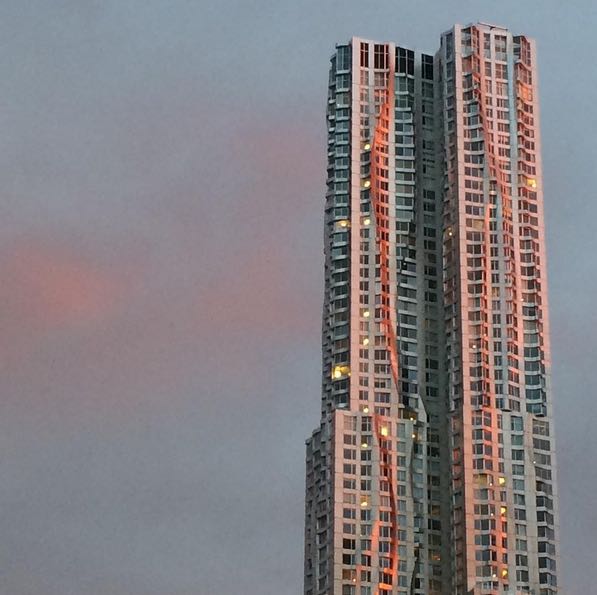
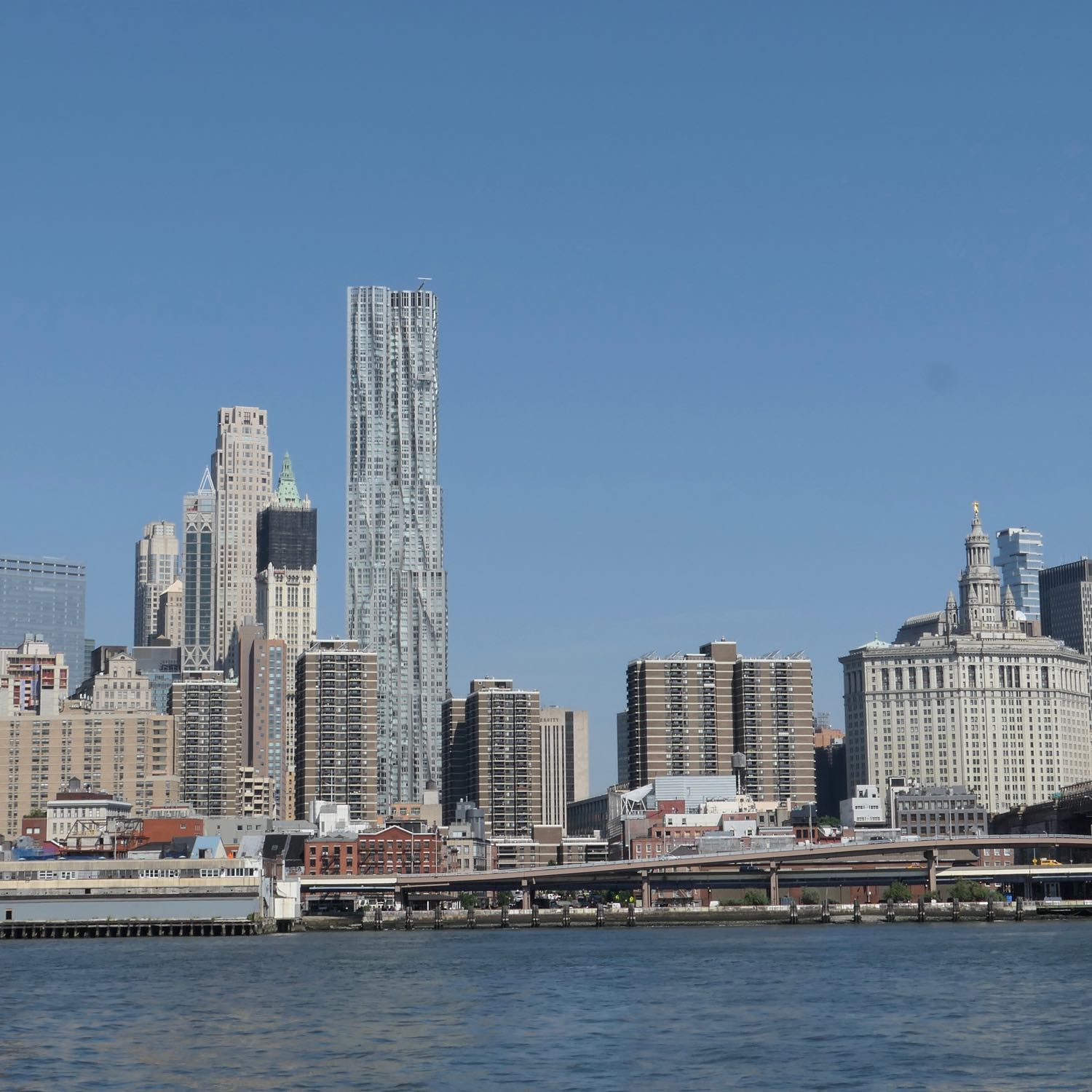
8 Spruce was not only Gehry’s first skyscraper, built for the developer Bruce Ratner, but when it opened in 2011 it was the tallest luxury residential tower in the city. “It seemed to epitomize the skyline’s transformation from a symbol of American commerce to a display of individual wealth,” The Times wrote in a review of the building.
“Only now, as the building nears completion, is it possible to appreciate what Mr. Gehry has accomplished: the finest skyscraper to rise in New York since Eero Saarinen’s CBS building went up 46 years ago,” The Times wrote. “And like that tower, and Philip Johnson’s AT&T (now Sony) building after it, 8 Spruce Street seems to crystallize a particular moment in cultural history, in this case the turning point from the modern to the digital age.”

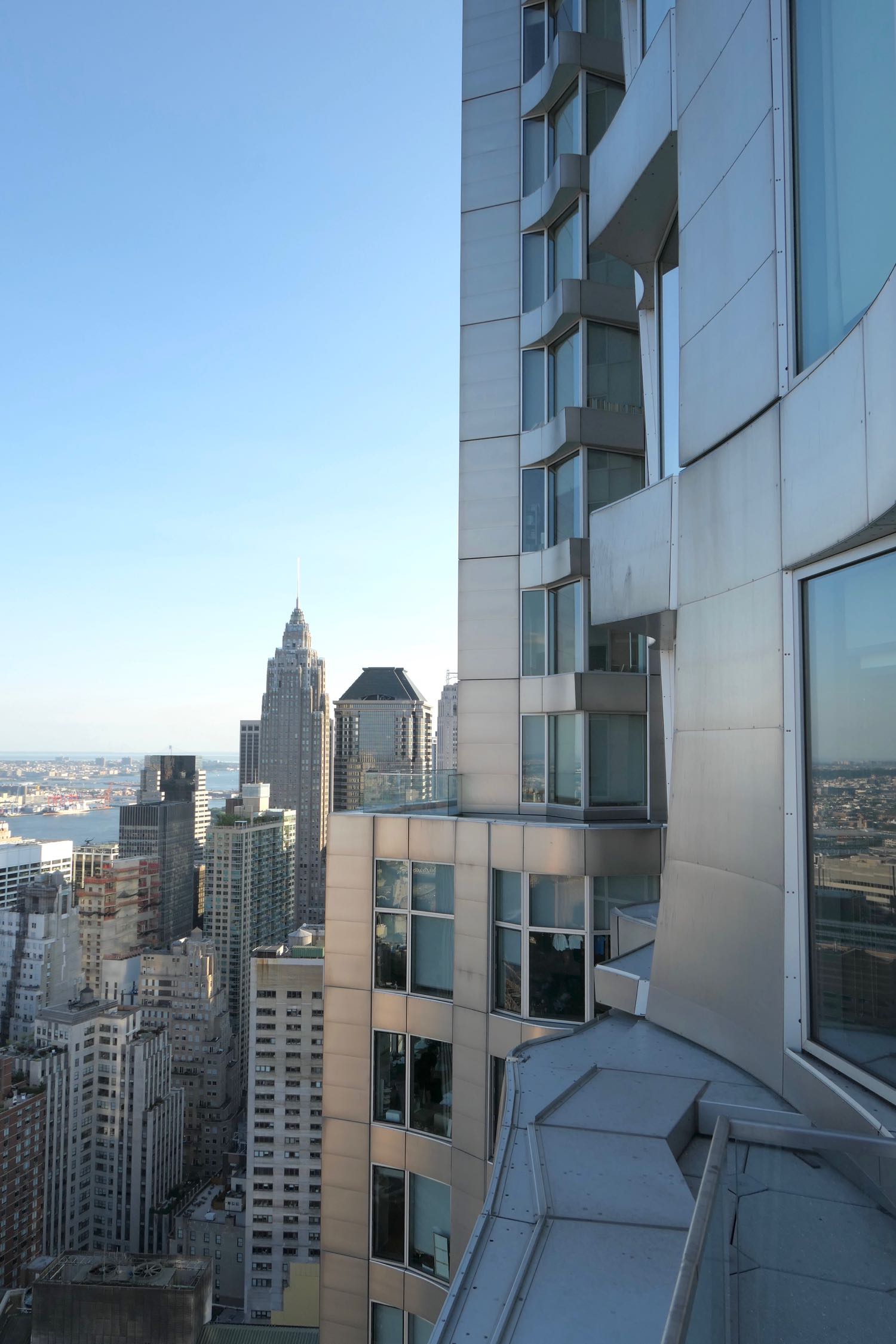
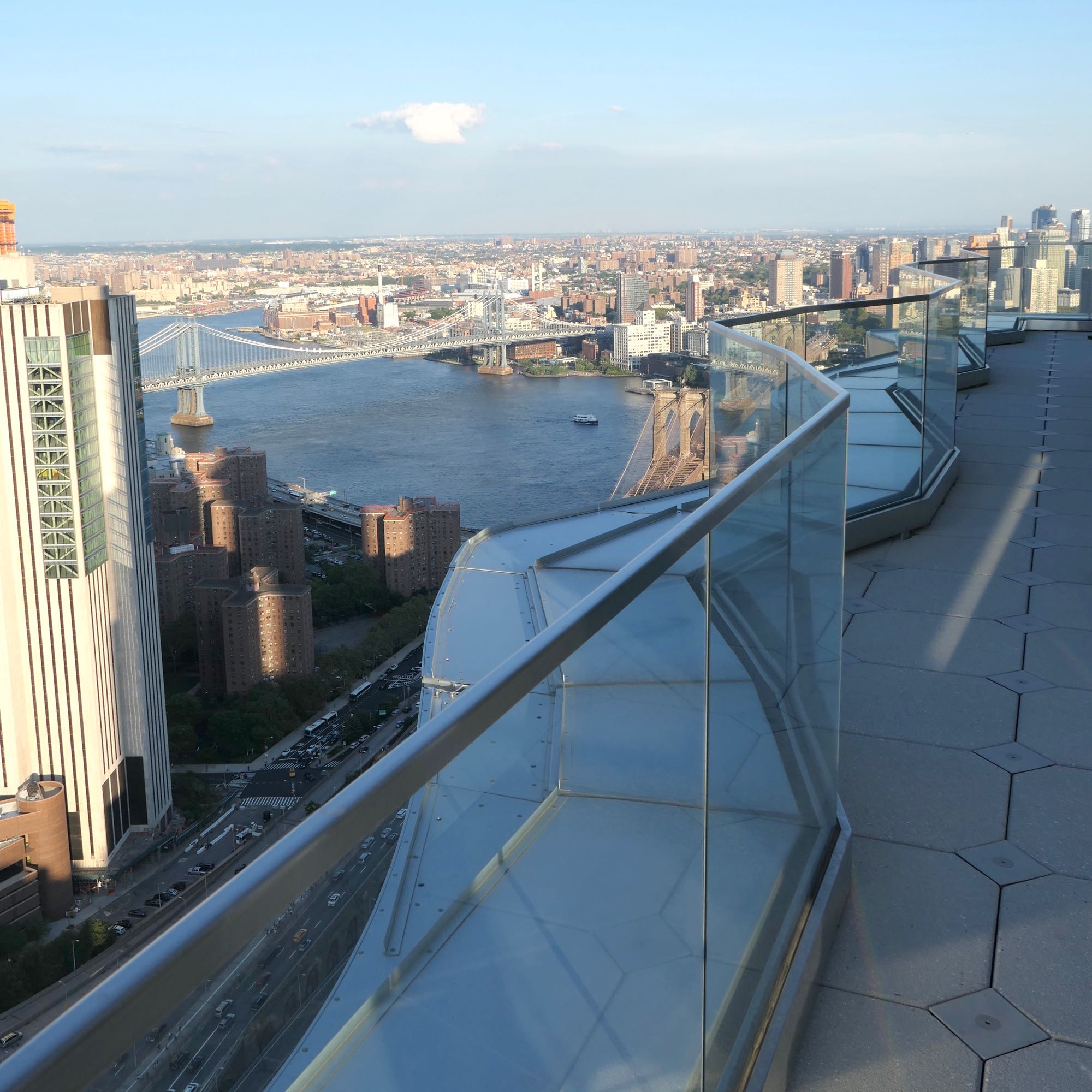
The rental building is 76 stories high and contains the Spruce Street School on the bottom floors. (The review *did* criticize the orange brick facade of the base — a letdown, it said, after you’ve seen the tower above.) The towers are stainless steel, designed so the facade looks rippled. And it is quite spectacular in the afternoon light.
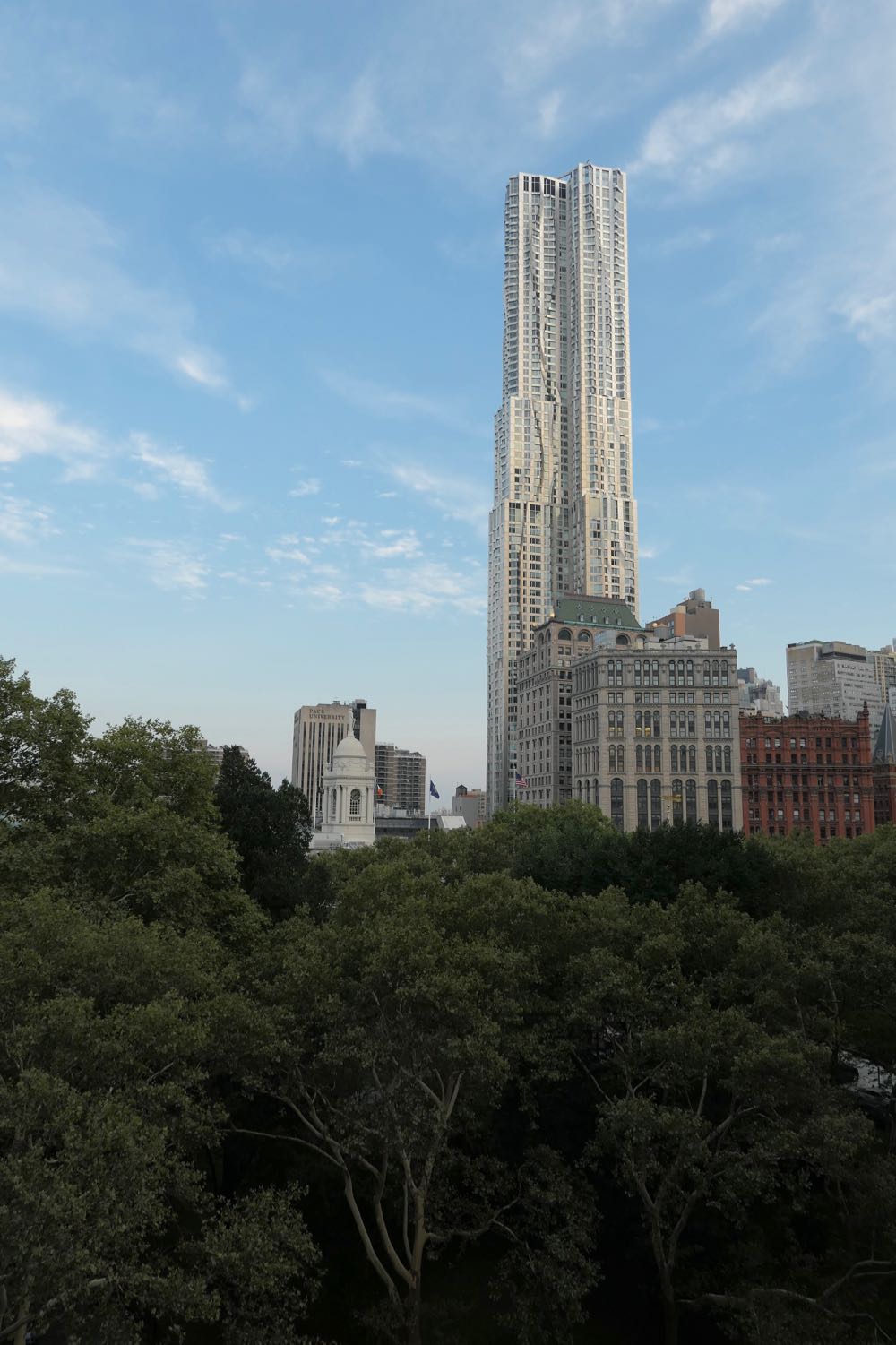
His first project in the city, in 2000, was the cafeteria at Conde Nast’s headquarters at 4 Times Square. The company is now downtown, but the installation there has been preserved by its new owner, the Durst Organization. “It’s aged very well,” Douglas Durst told The Times in 2015. “There’s no feeling that it’s from a different era at all.”
And then in 2001, he was commissioned to design the interior of the Issey Miyake store on Hudson and N. Moore. The brand is leaving for Madison Avenue at the end of the week, and the installation will be shipped to the Mikake archives in Japan.
And then in 2007, Barry Diller chose Gehry to design the IAC headquarters on the Westside Highway in Chelsea — a white glass building that seems to set sail right off the sidewalk.
Gehry has 20 projects that follow the 2011 unveiling of 8 Spruce, but that would be his last project in New York.

11 Comments
Comment:
Medium rectangle #1 (top)

Right column rectangle ads



Restaurant guide icon



There’s something worth noting about this building that many may not be aware of. I had the privilege of speaking with the architect about it, and he was gleefully proud to make the point that the floor plates were modeled mathematically, and individually formed to fit the facade. A decade and a half after the building rose it’s fully possible to construct even more complicated parametrically organized buildings by feeding numbers into machines and ordering the individual components from fabricators. His office developed its own proprietary software more than 20 years ago to help with the math, but Mr. Gehry used mind and hand to make his statements. This building actually embodies many of the most important points about this master’s aesthetic. There’s a lot here to love.
I’m not really an architecture guy, and I find much architecture criticism head-spinning. But these pic’s are remarkable. Bravo Pam!
They are Erik’s!
I think Gehry has done some wonderful buildings but Spruce St. to my mind is not among them. I don’t get the point of making what looks like a normal skyscraper but one that seems draped and wrinkling in the wind. Eh? And how does that exterior impact the experience of living in one of the units? To me it is an eyesore.
I knew a few people who live there. The apartments are handsome and well-appointed, but they’re typical apartments, with box-like rooms you’d find in a more typical apartment building. It’s something the residents I know have a bit of a laugh about.
From the 2011 NYT review: “(The flat south facade is comparatively conventional, and some may find perverse enjoyment in the fact that the building presents its backside to Wall Street.)”
I have heard a rumor that this was intentional. Anyone know if that’s true?
The flat side southern part of the building was the result of a cost saving measure, as the building started construction during the Great Recession. It was a shame that they couldn’t carry the waves to all four sides, but at least they still built it. It’s a great addition to the city skyline regardless.
I’m not sure where you’re getting this from, but Mr. Gehry had strong feelings about vernacular architecture, and he considered this building as fitting that “program” (to use the most common term). IOW, look at most city architecture — take as an example the vaunted “cast iron buildings” in our neighborhood that people fight tooth and nail to preserve (I feel they’re not worth preserving, but that’s another discussion). What part of those buildings makes them appealing? This is what the architect was addressing, according to his own well-known assertions on the subject. As such, 8 Spruce is perfectly in keeping with the genre.
It’s clear that Frank Gehry’s Tribeca skyscraper is impactful but doesn’t appeal to everyone’s taste. It took me a while to warm to the facade’s rippled appearance. However, IMHO, it has much more character than some of the other supertall residential towers that are clustered in Midtown.
Compared with Gehry’s other works, 8 Spruce does not overdo the squiggles and curves that are his hallmark. In fact, as a settled part of our skyline, it adds a modern touch that contrasts favorably with other neighborhood landmarks like the Woolworth Building. And, without being pilloried by architectural critics, I prefer this look to the originally monolithic but now somewhat softened building at 375 Pearl Street and Warnecke’s windowless AT&T Long Lines building at 33 Thomas Street.
And 8 Spruce holds my interest more than the shiny, inescapable skyscraper residence across the way (One Manhattan Square at 250 South Street).
I know I’m coming off as a fanboy, and maybe I am a bit, but when you look downtown and see the building from Nolita, for instance, the coruscating facade simply sings, in my opinion.
I was never a huge fan of his work, but I like 8 Spruce enough. A good sunset does the building wonders.
One building of his that I actually love is Fondation Louis Vuitton within Bois de Boulogne in Paris. There’s an excellent Gerhard Richter retrospective there right now if anyone is headed that way.