


Left rectangle ads redesigned

Robert Ripps book

History of Tribeca Buildings

Congestion Pricing survives the latest challenge
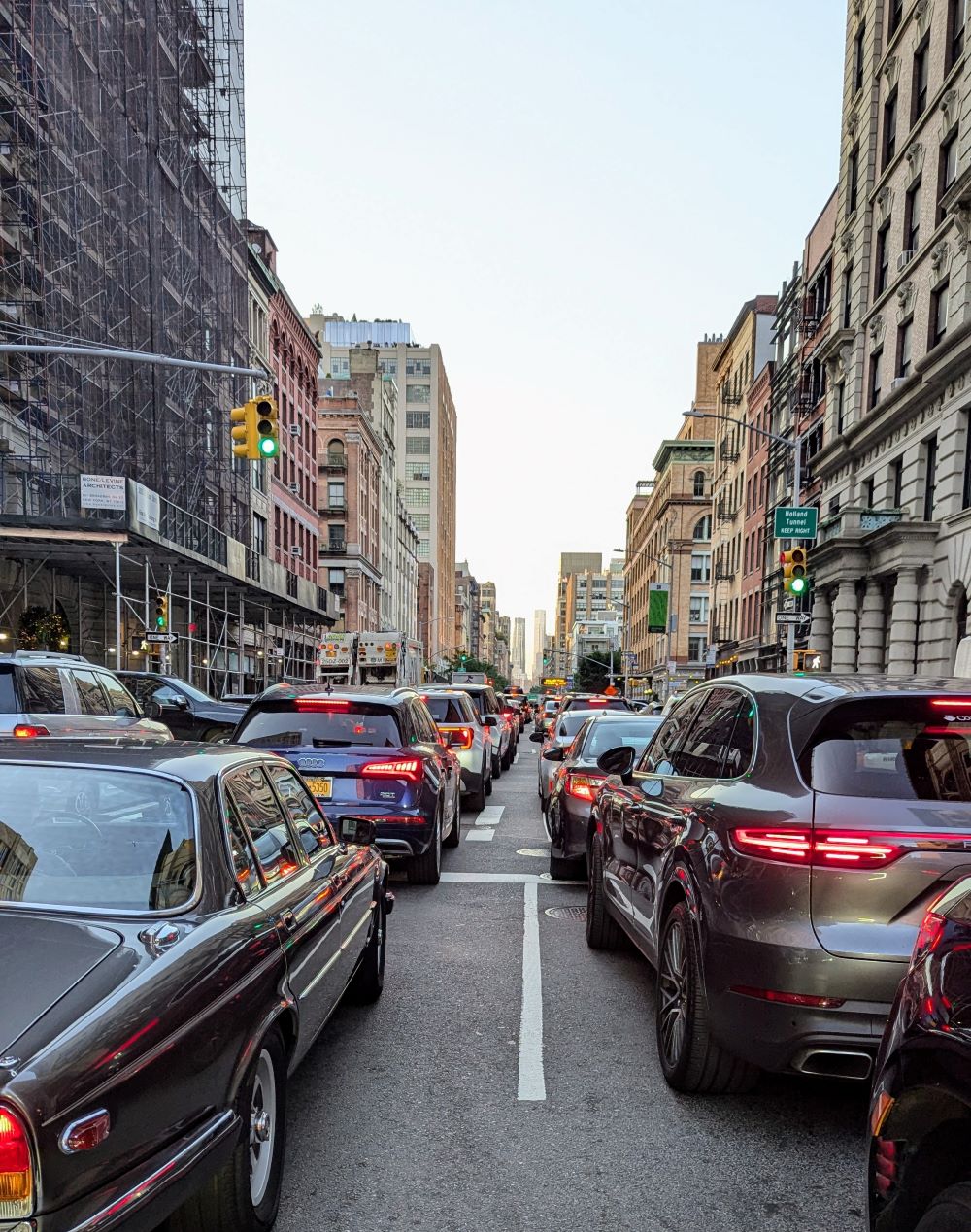
ICYMI, a US District judge ruled last week that the congestion pricing program can continue despite the Trump administration’s efforts to derail it starting the minute Trump took office. Everyone covered it — you can read The Times here, Crain’s here, or Streetsblog here, but the story is the same: the attempt by US Transportation Secretary Sean Duffy to end the program was “arbitrary and capricious.”
The Metropolitan Transportation Authority had to sue the federal government to block it from ending the program; Crain’s reports that there still could be more to come if the Trump administration takes the case to the U.S. Court of Appeals for the Second Circuit.
Still, it’s a victory for now. “We’ve said it all along, and Judge Liman’s clear, detailed ruling leaves no doubt: congestion pricing is legal. It’s here to stay. And it works,” said MTA chair and CEO Janno Lieber in a statement. “Traffic is down, business is up, and we’re making crucial investments in a transit system that moves millions of people a day. Today — once again — Secretary Duffy failed and New York is winning.”
6 Comments
Comment:
Medium rectangle #1 (top)

Right column rectangle ads


Restaurant guide icon


Glad to hear this.
More needs to be done about traffic still, including simple enforcement of basic traffic laws (which shouldn’t even need to be enforced, and should be simple common sense and courtesy as well, but here we are in street anarchy). Surely one of the major causes of congestion is “blocking the box” (blocking intersection on a red light), which is also awful and dangerous for pedestrians. Also will NYC ever enforce no-honking laws? I’ve actually heard politicians argue that people would miss the sound of car and truck horns, that it’s part of the identity of NYC. That sounds like madness to me. I guess litter and public urination are also part of the “identity” of NYC so we should celebrate and appreciate those too.
We definitely need to enforce traffic laws. As you note, blocking the box is a big one, and I would also add: license plate covers, illegal temporary tags, and placard abuse. Illegal parking (often by police or people in government) drives me absolutely nuts. We aren’t living in a society when it’s rules for thee, not for me.
As for CP: I understand the need for simplicity just to get it going and to create facts on the ground. As an evolution, I favor variable pricing (e.g., for gridlock days, UNGA, holiday weekends) with the floor higher than the current $9. With a round-trip subway fare now $6, I think the marginal cost for a driver needs to be steeper than $3; it’s of course cheaper to drive with two or more people paying fares.
@malcolm — With respect for your acumen, I’ll add that any congestion pricing tweaks probably must wait till after November (gov’s re-election + congressional midterms). At that point, advocates will be pushing Hochul to nail down her promise to raise the toll to $12 in Jan. 2028. That could be an occasion for related reforms.
What’s your take on converting the Uber and taxi CP surcharges from flat fees to per-minute-in-the-zone pricing? Even making it revenue-neutral, this swap could add several percentage points to CP’s boost in traffic speeds within the zone, by encouraging passengers to avoid peak-period and extra-long trips. Details here: https://nyc.streetsblog.org/2026/03/04/a-fairer-and-better-way-for-taxi-passengers-to-pay-the-congestion-toll-komanoff-per-minute-charge.
I defer to your expertise on these matters, Mr. Komanoff!
I read your piece on per-minute pricing when it was first published, and it seems sensible to me.
Mr. Komanoff,
Today my partner and I assisted an elderly family friend who was being discharged from the hospital (out of the CP zone) and took him home via taxi (in the CP zone).
Unless I am misunderstanding, your proposal – additional per minute pricing – would have meant a much more expensive fare than the current CP surcharges?
(I believe there was an initial CP surcharge in 2018? and then another when CP was actually implemented)
Hi Lisa —
I hope your friend is recuperating nicely.
You’re absolutely right about there being initial (and higher!) CP surcharges for Ubers and yellows in 2018. The smaller new surcharges have been tacked on to those.
I want to be clear that (i) my per-minute taxi-and-Uber surcharges would be calibrated to be revenue-equivalent (“revenue-neutral”) to the flat surcharges they would replace, and (ii) the surcharge “meter” would be on only when the vehicle (with passenger) are in the congestion zone.
I hope this helps. My Streetsblog story spells this out. Best wishes to you and your friend.