

Left rectangle ads redesigned
History of Tribeca Buildings
Art in Tribeca: Sculptures That Define the Modern Era
The Times’ T magazine asked a panel of four artists and a curator to make a list of 25 sculptures “that define the modern age.” The results have a couple connections to the neighborhood, including one current installation that is a short walk to Fidi and worth seeing — even if you have strolled past it a thousand times before.
Artist Arlene Shechet picked, among others, Isamu Noguchi’s 1964 “Sunken Garden for Chase Manhattan Bank Plaza” at 28 Liberty, which is now Fosun Plaza. From T’s Instagram, with an interview with Shechet: “Sixteen feet below the plaza’s main level, Noguchi arranged 27,000 cream-colored granite tiles to encircle seven basalt boulders that had been pulled from the bed of Kyoto’s Uji River. Amid them he placed a fountain that when switched on created a shallow pool. To this day, the garden’s organic elements lend a welcome sense of the terrestrial and offer passers-by a moment of respite.”
Of course the plaza also holds Jean Dubuffet “Group of Four Trees” and the Noguchi sculpture “Red Cube” is just around the corner at 140 Broadway.
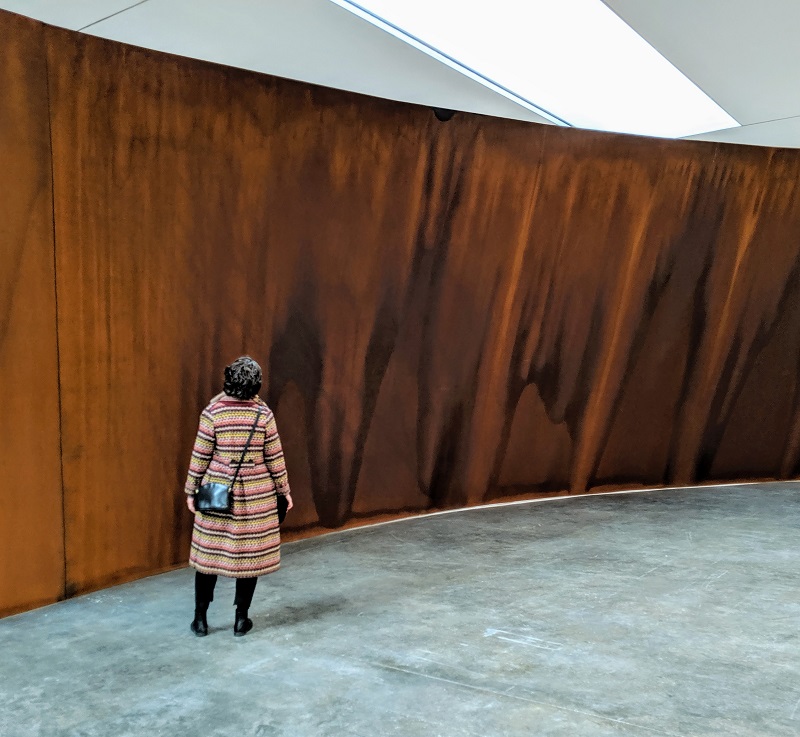
Late Tribecan Richard Serra’s 1981 installation at Federal Plaza — “Tilted Arc,” a curved piece of steel 120 feet long and 12 feet high — is on the list. It was met with community opposition and disassembled in 1989.
From The Times: “Office workers and residents protested what they viewed as an aggressive, unsightly obstacle to the flow of pedestrians. The length of oxidized rust-covered metal resembled a taut pen stroke when seen from above or from the side but loomed like an impassable border wall to those facing it. A hearing was convened, followed by a lawsuit about free speech and contract law that the artist eventually lost. The case changed the way in which public art was commissioned in America, helping to make community input standard practice and signaling the end of artistic autonomy in shared spaces, much to Serra’s chagrin. In March 1989, as ‘Tilted Arc’ was about to be cut into pieces and hauled to a government parking lot in Brooklyn, Serra declared: ‘This government is savage. It is eating its culture.'”
And the performance artist Pope.L’s crawls made the list, specifically “The Great White Way: 22 Miles, 9 Years, 1 Street,” where he commando-crawled Broadway from Liberty Island through The Battery, Fidi, Tribeca and eventually to the Bronx in increments. From The Times: “Here was a Black man in a blue Superman suit who exuded neither heroism nor otherworldly strength. In lieu of a cape, the artist wore a skateboard strapped to his back and would sometimes flip himself over to wheel across busy intersections or give his knees and elbows a break. Interviewed in January 2002 — four months after 9/11 — Pope.L noted that Superman, arguably an icon of American dominance, was now ‘just like the rest of us, trying to make it through the day.'”
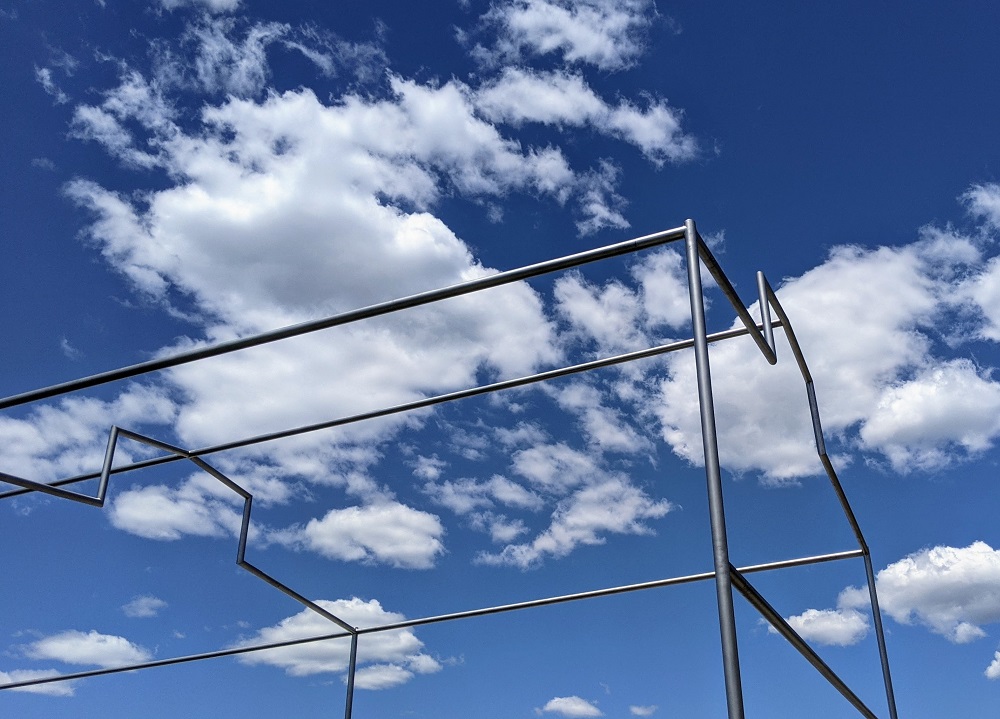
Finally, local connections to art that is a bit farther afield: David Hammons, whose sculpture is in Hudson River Park just across from the Whitney, is on the list for his “African-American Flag” (1990/1997), which hangs over the entrance of the Studio Museum in Harlem; Marisol’s “Women and Dog” from 1963-64 is in the Whitney’s permanent collection; and Louise Nevelson’s “Sky Cathedral” from 1958 makes the list. There is an entire plaza of Nevelson’s work on William Street, not far from 28 Liberty in fact.

Comment:
Medium rectangle #1 (top)

Right column rectangle ads


Restaurant guide icon