


Left rectangle ads redesigned
Robert Ripps book
History of Tribeca Buildings
Sneak Peek: 14 White
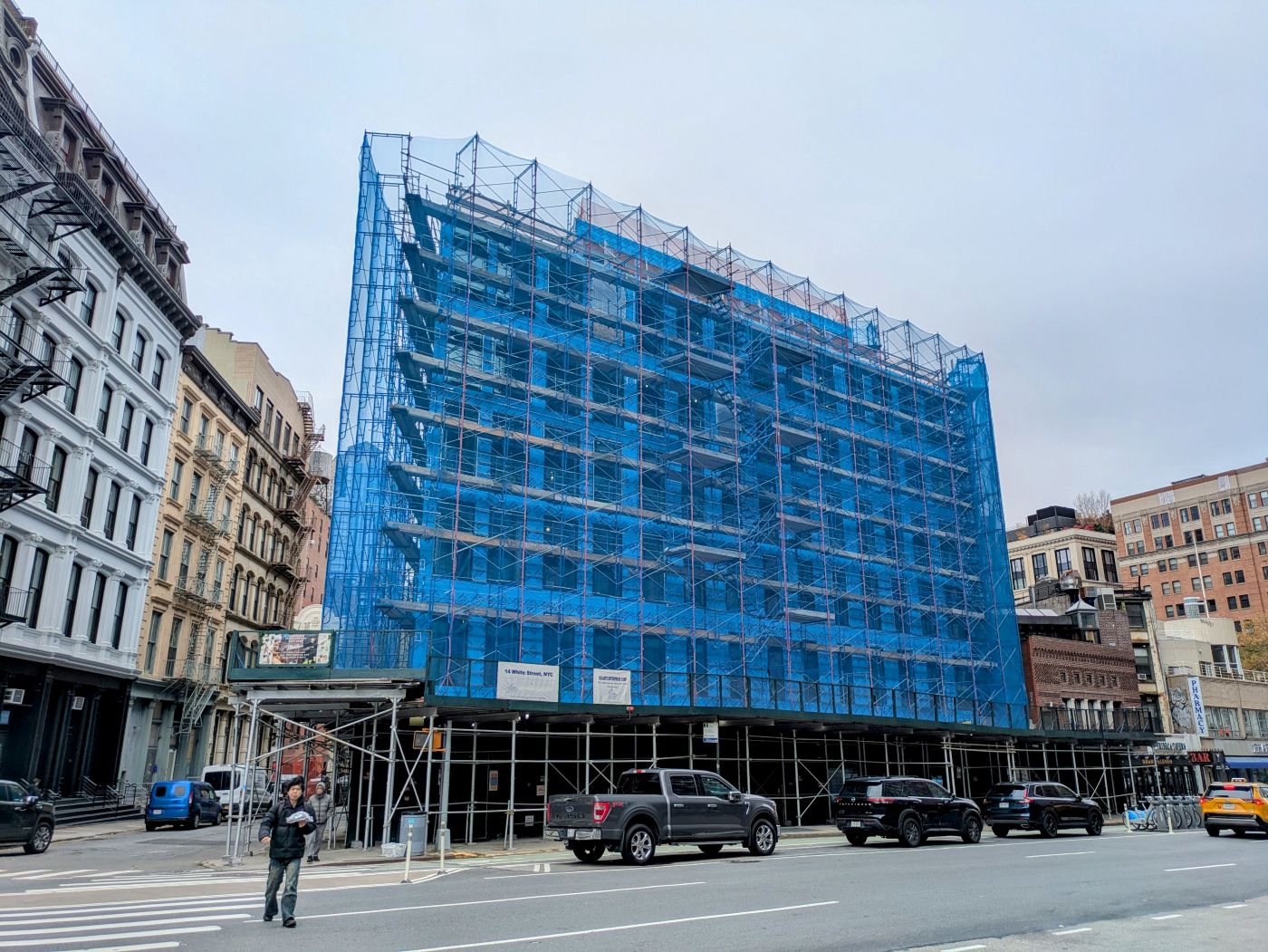
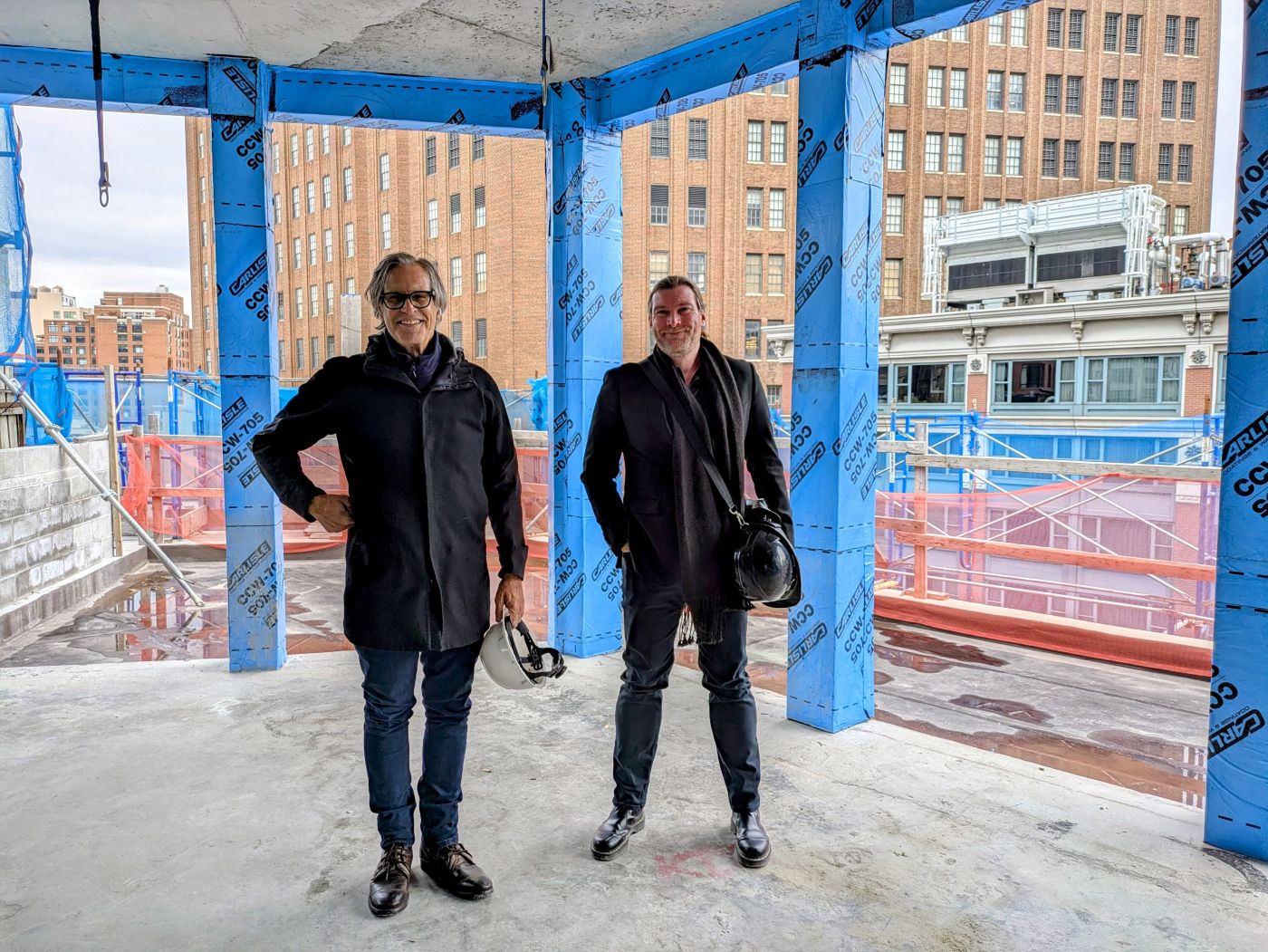
Another day, another hardhat tour — this time with one of the developers of the new 14 White, Frank LePera, and the architect-of-record, Alexander Loyer Hughes of KURV Architecture. (That’s them, below, on the terrace of the penthouse.) As a reminder, this was an empty lot that once had a JR mural on the lot-line wall of 12 White. Together, the development partners are Parametric Development Corporation; partner David Ruff’s architectural firm, NAVA, did the interior layouts and design.
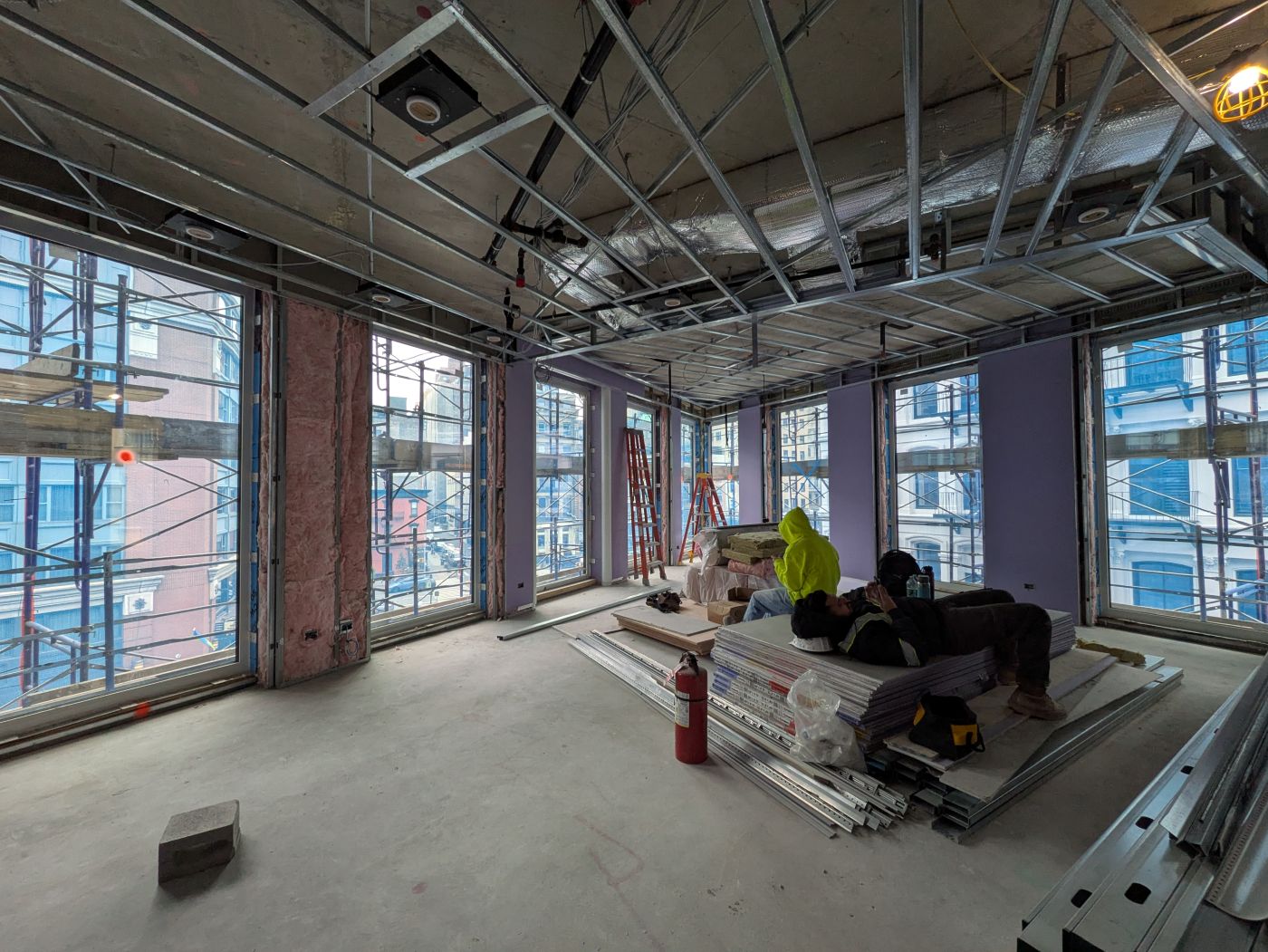
The building has been under construction since 2022, when LePera first broke ground hoping for an 18-month build (they paused while the market turned around). He is now hoping for a certificate of occupancy to be ready in May — April if he’s especially lucky. The end result: a six-story building with a partial seventh floor for a penthouse, all clad in etched bronze panels.
The original concept design was done by DXA Studio for seven units, one parking space and retail on the ground floor facing Sixth Avenue and The Roxy. The lobby will be on White.
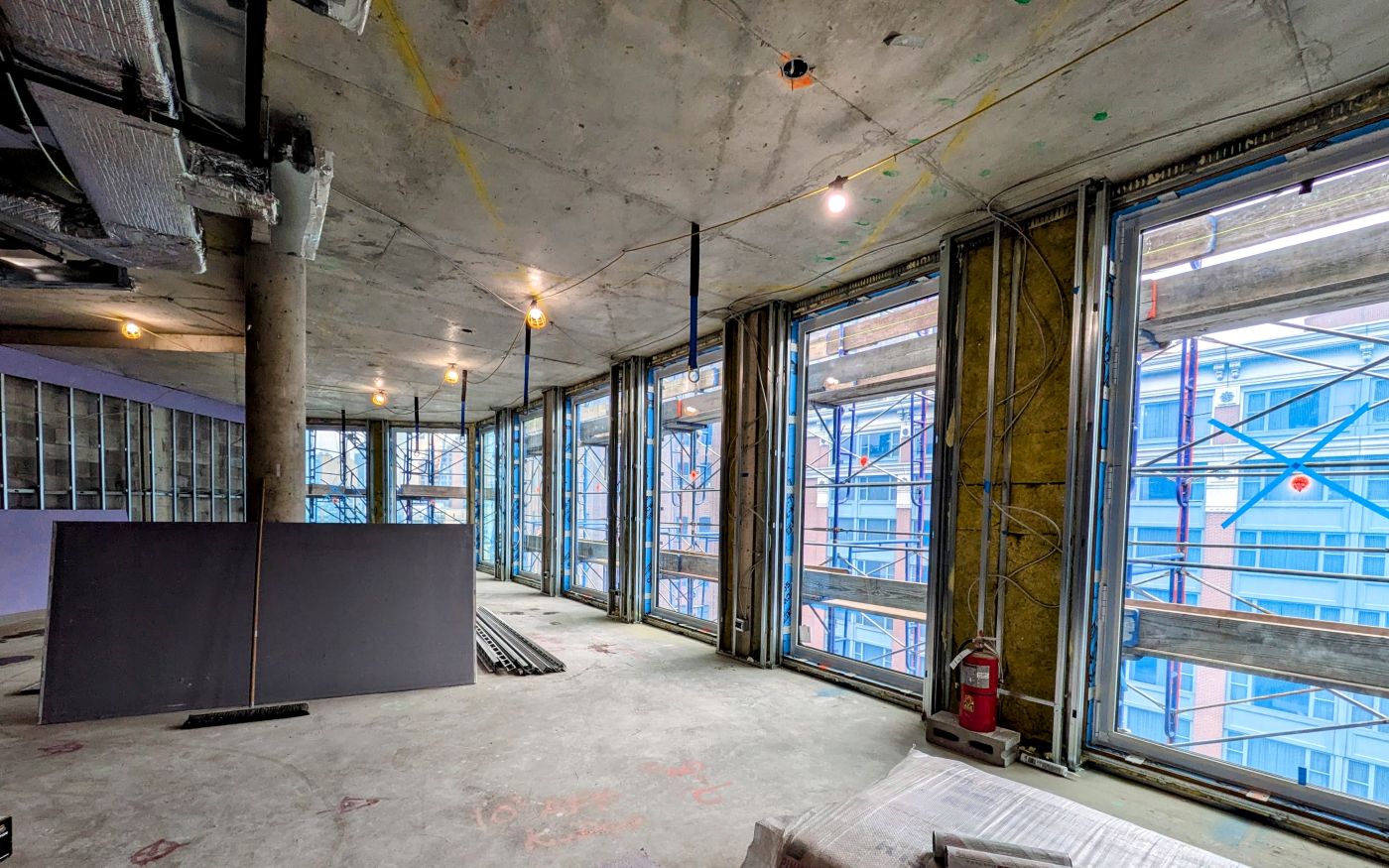
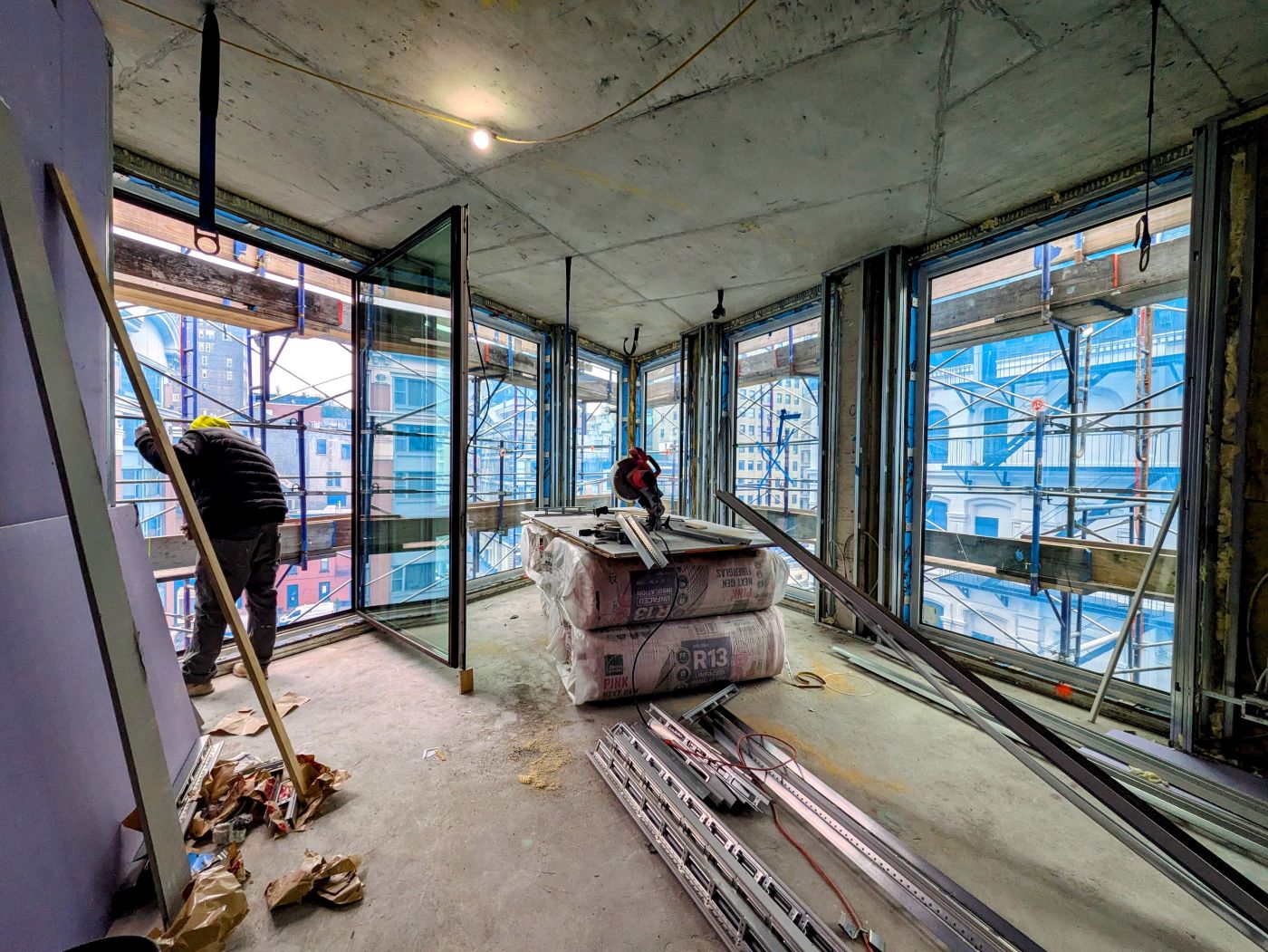
There are two apartments on each the second and third floors; one unit on each the fourth and the fifth floor; and a duplex on six. Each floor is 3300 square feet. The 10-foot ceilings are typical of Tribeca but the 9-foot windows are not. They are huge! And they give a view of the neighborhood that is uniquely open, especially on the Sixth Avenue side.
The next three images are renderings.
More TK when the facade is revealed.





Affordable housing at its best!
Yes! Quite affordable for the more than 800 billionaires in America!
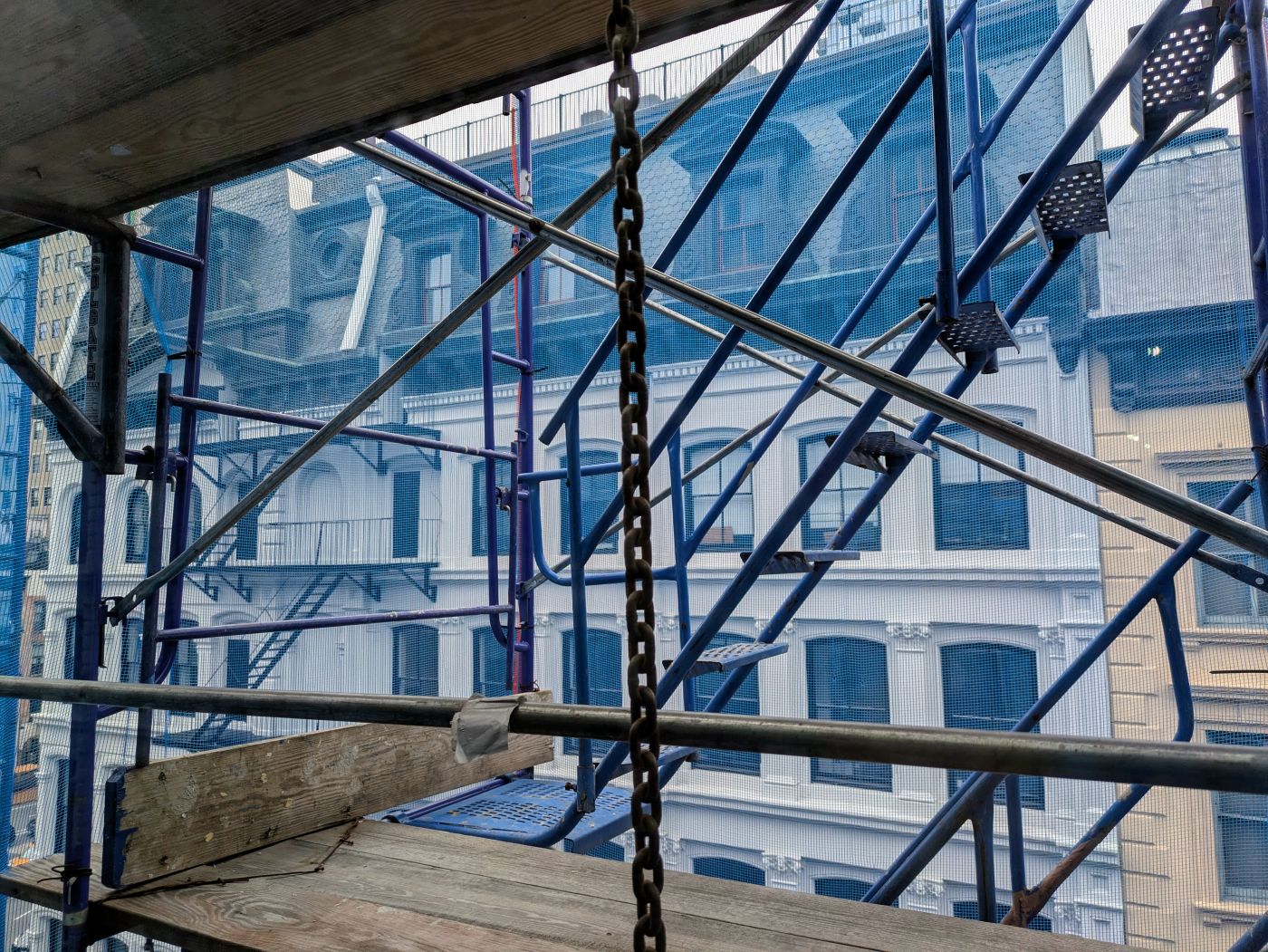
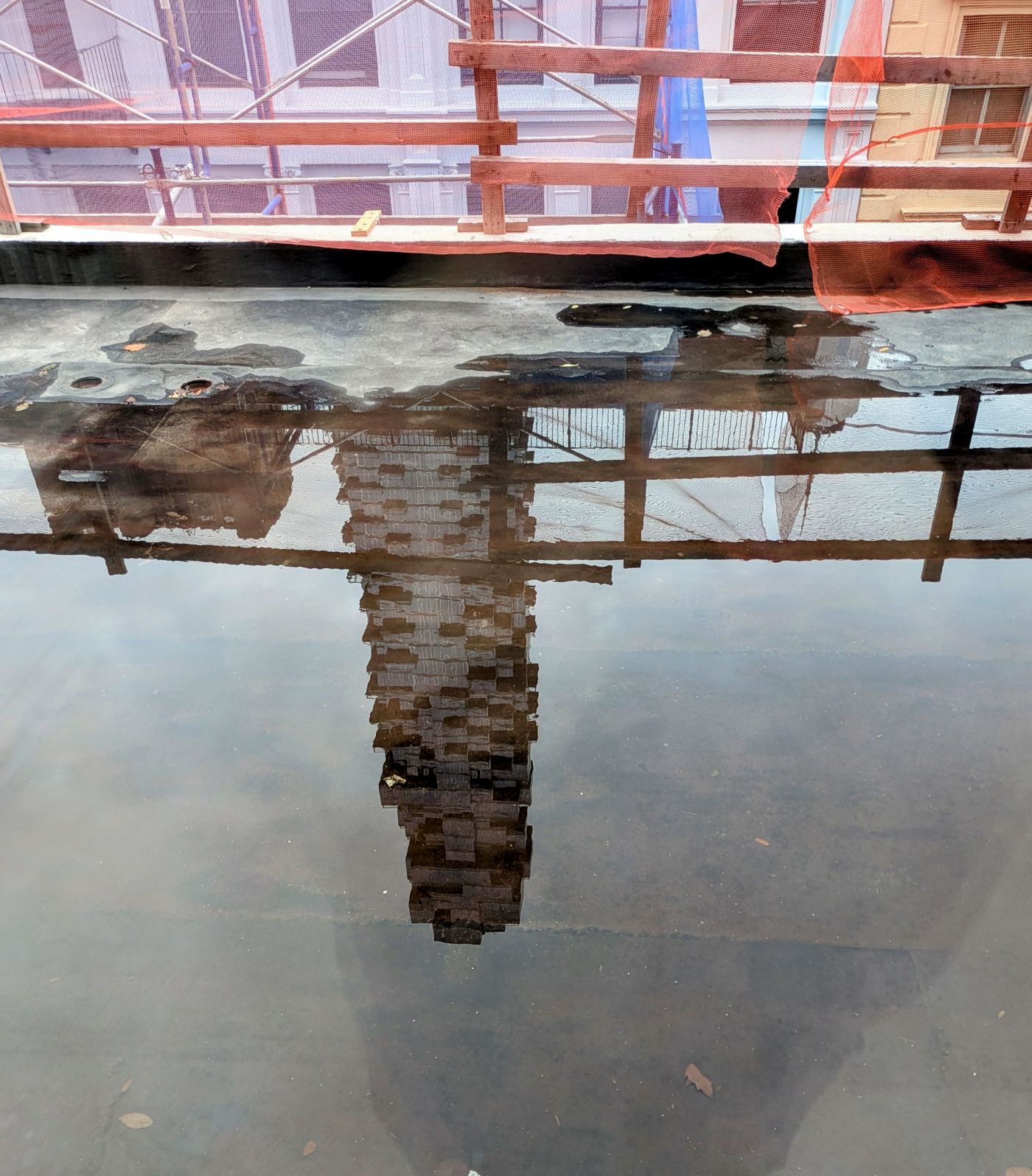
The best part about those 9 ft windows is the inability to see 14 White while looking out through them.
The facade resembles two buildings on Church Street – one on the corner of Warren, the other at Chambers Street. Apparently bronze panels are the au courant cladding of choice for some of Tribeca’s low-rise residential developments.
Whether or not this look fits in with the tone and style of the neighborhood is another matter. However, metal cladding is not new. Even cast-iron architecture might have been considered avant garde when it first appeared.
Sorry, Mr. Gehry – not everything can be stainless steel like 8 Spruce Street!
“Even cast-iron architecture might have been considered avant garde when it first appeared.”
No. Just no.
Cast iron was intentionally designed and used in 19th-century architecture to resemble stone, mimicking more expensive carved facades at a fraction of the cost (while allowing for ornate details, quicker construction, and fire resistance.). Cast iron fronts were originally painted in off-white tones (and sometimes with flecked paint) to resemble stone. Look at the 1857 Cary Building in Tribeca and the 1857 E.V. Haughwout building in Soho for examples of one of the earliest cast iron facades meant to resemble stone. Only later did the large window and storefront openings become part of the architectural use of cast iron, and only in the 20th century did black and other factory colors appear on these fronts. Preservationist Margot Gayle was well known for bringing a magnet on her tours of cast iron architecture to show what was iron and not stone (as the New York Times even noted in the very first sentence of her 2008 obituary.)
Compare that to 14 White’s “distinctive patinated etched bronze panel [… a] synthesis of unique site considerations and district precedents, a contemporary metal envelope meant to establish a dialogue with the neighboring cast iron manufacturing buildings”. That is word salad, contrived by architects merely to satisfy LPC and obtain construction approval in a landmark district.
I don’t dispute James Bogardus’s extensive explanation.
When I called cast iron architecture “avant garde,” I was referring to the newness of the technique and material. It was the idea that pre-fabricated components could be rapidly assembled and provide the benefits that Mr. Bogardus outlined above. What they were designed to resemble was not in question.
And, yes, I greatly prefer Mr. Bogardus’s elucidation over the “word salad” of that carefully chosen and curated archispeak. Thank you for refreshing my knowledge of cast iron construction from long-ago.