


Left rectangle ads redesigned

Robert Ripps book
History of Tribeca Buildings

Books of Tribeca: Future Boy: Back to the Future and My Journey Through the Space-Time Continuum
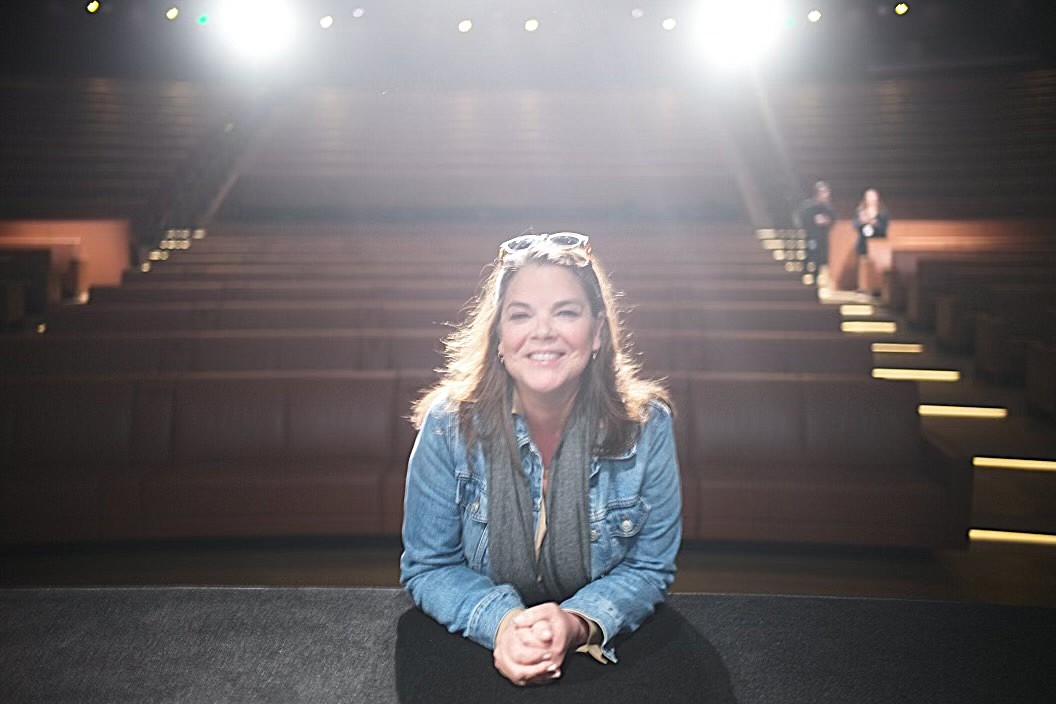
Photo by Davis Guggenheim at Apple headquarters in Cupertino
Tribecan Nelle Fortenberry has co-authored “Future Boy: Back to the Future and My Journey Through the Space-Time Continuum,” Michael J. Fox’s account of the making of the iconic film — a New York Times bestseller and on several lists for the Best Books of 2025. If you are a fan of either Michael or the movie (I am both) it is a great read — or listen. Nelle, who is Fox’s longtime producing partner and a founding board member of The Michael J. Fox Foundation for Parkinson’s Research, reflects here on how she got to this point, and what’s ahead. Her career arc is remarkable, and there’s more to come.
How did you meet Michael J. Fox?
Officially we met in 1996, but we had actually crossed paths twice before. My first job out of UCLA film school was as an assistant at Amblin (Steven Spielberg’s production company), during the same time that they were producing “Back to the Future.” It was the first Amblin script I read and I remember being blown away by it — I was so excited. If someone had told me then that in my future, Michael J. Fox would not only be my most rewarding professional partnership but also one of my closest friends, I wouldn’t have believed it.
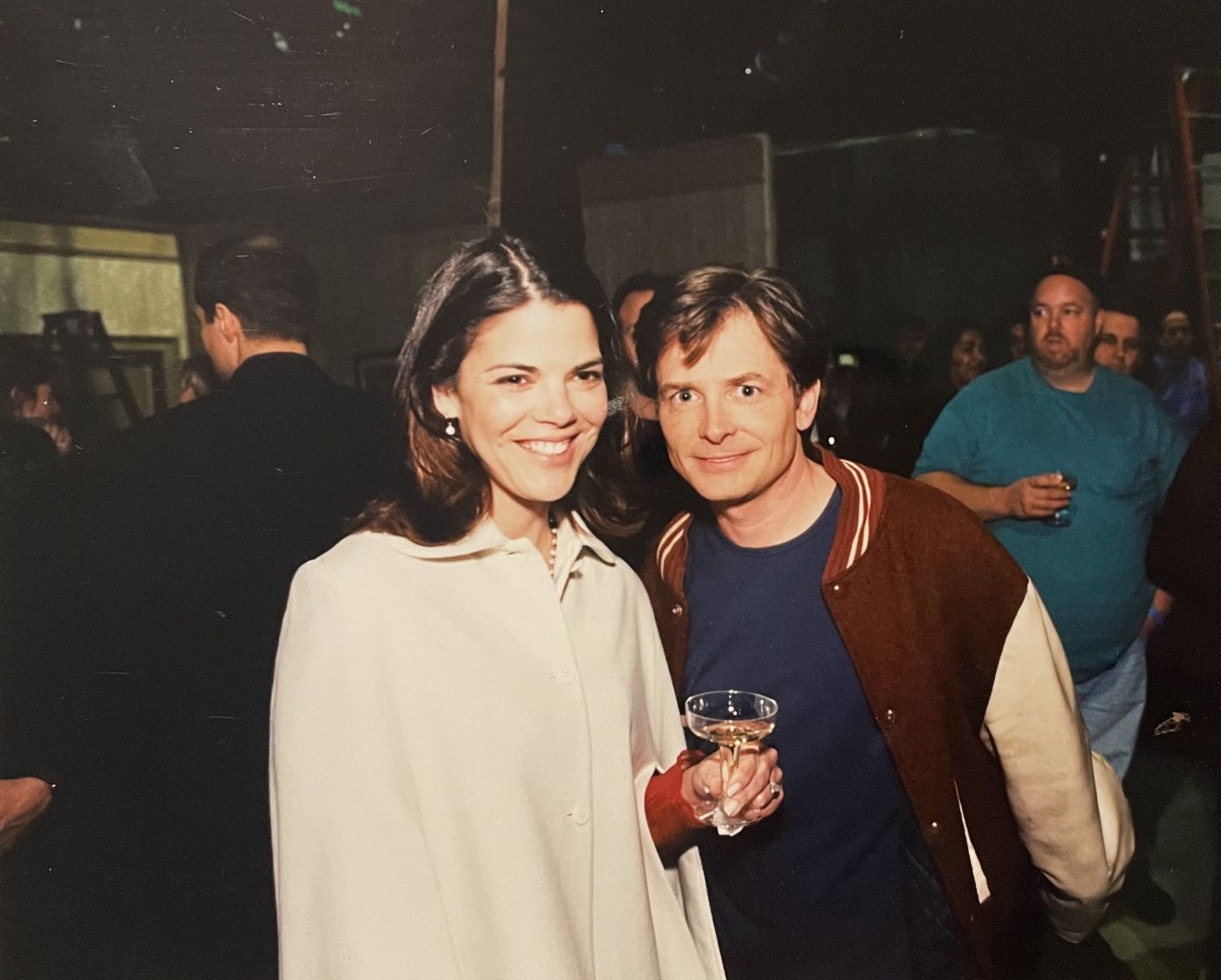
On the set of “Spin City”
After Amblin I worked for Ron Howard for two years, and then I was hired as a creative executive at NBC, assigned to oversee seven sitcoms including “Family Ties.” Michael and I didn’t interact because I worked directly with the writers and producers, but it’s such a coincidence that I had a connection to both of his famous projects. I eventually rose to be a network vice president and moved to New York to work on “The Cosby Show,” the initial seasons of “Law & Order,” and a soap opera called “Another World,” among other projects. I loved it — my office overlooked the ice skating rink at Rockefeller Center — but I worked non-stop and by age 32, I was burned out. I walked away from it all and decided to travel the world solo for a year and a half, using Paris as my homebase. That was a terrific time in my life, and great things were soon to follow.
When I returned to New York, I got a job offer right away from Brillstein-Grey Entertainment to supervise “The Dana Carvey Show,” and that’s where I met my husband John, who directed it. Steve Carell and Stephen Colbert were in our ensemble. Looking back, that show was ahead of its time, comedically. The humor was too edgy for primetime television and the network and the studio were not in agreement on how far we were going to push things. ABC pulled the plug after only three months.
As that show was ending, I got a call from Michael J. Fox’s lawyer, whom I knew through a friend at UCLA. Michael was looking for someone to run his production company. I said I am a huge fan, but I love my job at Brillstein-Grey. Wisely, he encouraged me to meet Michael anyway. Within 30 minutes I thought, this could be an amazing collaboration — he’s incredibly sharp, has such good taste, is really funny, and has respect for writers, producers, directors, and fellow actors (you can see those qualities when you read “Future Boy”). He’s just a real team player. He honors every piece of the creative process that makes something great. People love working with him because of that.
 What was your first project together?
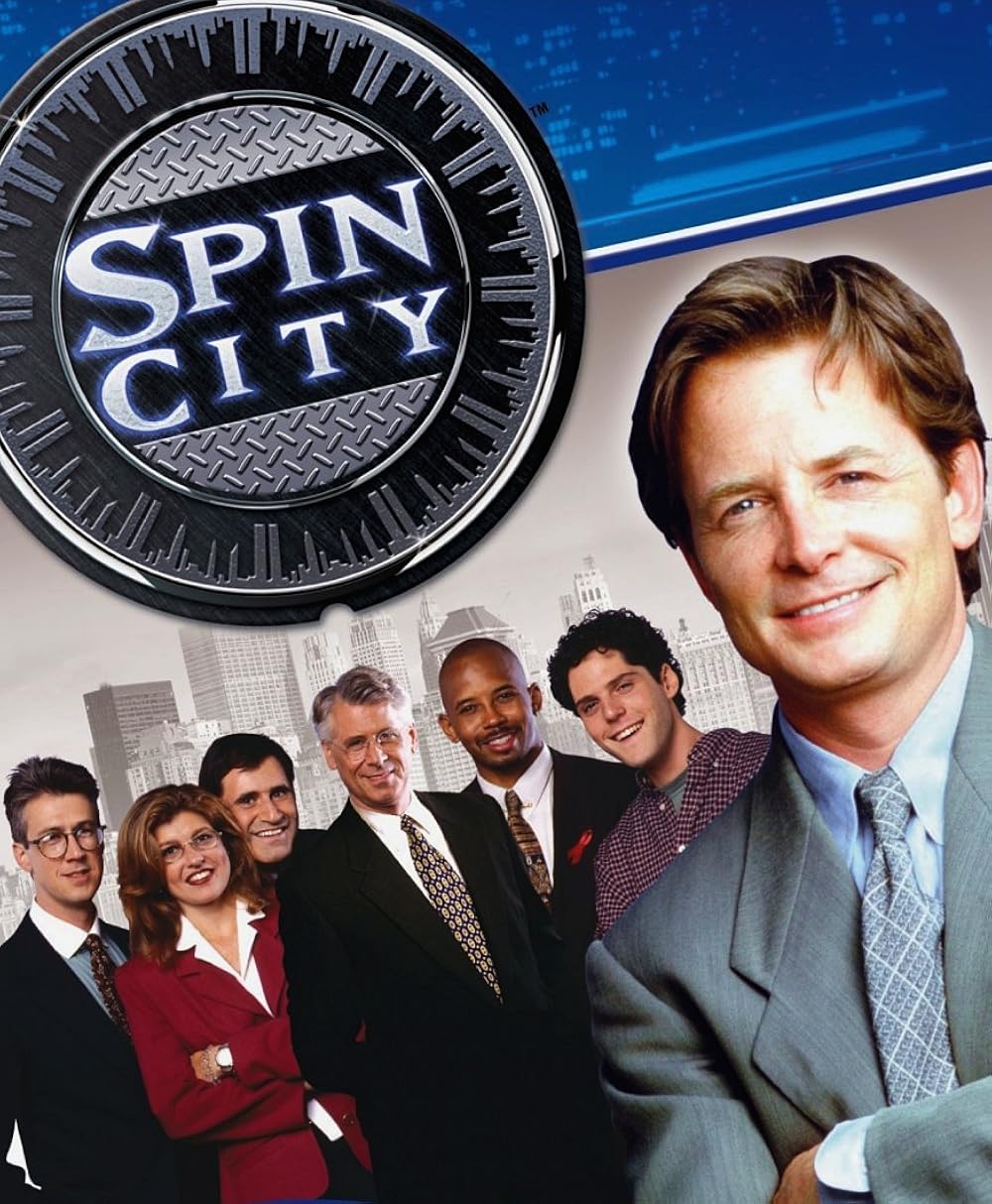
I started on the first episode of “Spin City” and from the beginning, it was just great coming to work each day to watch the mastery of his talent. He really elevated everyone. It was his show, but the way he conducted himself with the crew, I really admired that. I had worked in the business a long time and I’d had some difficult bosses. I thought, look at how someone can lead this way, and get the best out of people.
One funny aside about my first week working with Michael: About 30 minutes before we were set to film the first episode of “Spin City,” I went to the hair and makeup room to chat with Michael about another project we were developing. He looked at me and very kindly said, “This is when I memorize my script.” There was a live audience waiting and hairdryers blowing, but that was the moment he committed the script to memory. He put it in his head minutes beforehand. I never again talked to him before the show!
When did you first learn about his Parkinson’s diagnosis?
He was 34 when we started working together; he had been diagnosed a few years earlier at 29. He told me the summer after the first season of “Spin City.” Professionally, no one else knew except for co-creator/executive producer Gary David Goldberg, and our partners at DreamWorks. He didn’t tell the world until mid-way through the third season.
I started to see then what it took for him to hide those small but still visible symptoms. He’s such a physical actor, and the challenge was to get his body to do something he wanted it to do, with Parkinson’s fighting him the whole time. It was fascinating to watch him work, and I was so impressed. I wanted to support him any way that I could and make his work life as easy as possible.
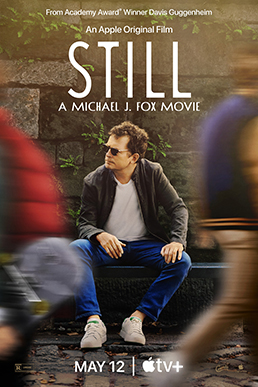 How did the documentary “STILL: A Michael J. Fox Movie” come about?
Michael had declined past offers to do a documentary, but Davis Guggenheim [the director] impressed us. As a documentarian, he is very choosy about his subjects. He came over for a cup of coffee on Michael’s porch and listed his favorite anecdotes from Michael’s memoir that he thought could tell the visual story of his improbable success. As a rule, Davis never allows his subject to serve as a producer, so Michael insisted that I represent him as an executive producer. I think Davis was a little suspicious of that in the beginning, but we worked great together. We filmed for over a year in the city, Amagansett, LA and Vancouver. Michael and I were both immensely proud of the movie.
What else have you done together?
After “Spin City” we produced several TV pilots and made an Emmy-nominated special for ABC in Bhutan and India. I worked on Michael’s last three books doing the research, outlining the chapters, editing, and coordinating everything with the publisher. During Michael’s first book “Lucky Man: A Memoir,” I was pregnant with my second child, Chance, so Michael Pollan (Michael’s brother-in-law) was his guide in getting that book figured out. Michael Fox did all the writing but Pollan was a real help in giving him the confidence and the framework to keep going.
When Michael pitched me the idea for the “Back to the Future” book, he said, “I just don’t have the stamina anymore to get this done.” He asked if I would co-author it with him. Michael is an amazing writer, but I am not a bad writer either — and I know his voice. We agreed on a process that worked really well. For the first few months I compiled research and interviewed him for our transcripts. Then I started writing first drafts of chapters, out of order. I read these placeholder pages aloud to him, which sparked more questions and ideas for him to dictate rewrites. He can no longer physically write or type, but he has the remarkable ability to speak in beautifully constructed sentences. The guy did not graduate from high school, but he is very well read and has an amazing vocabulary.
We were working on a tight publishing deadline for the book to coincide with the 40th anniversary re-release of the movie. Michael has had Parkinson’s for over 30 years — so some days the writing pace was really difficult. It helped us to supplement his memories by interviewing many of the actors and crew from “Back to the Future” and “Family Ties.” We flew to LA to meet with Bob Zemeckis [the movie’s director and co-writer], writer Bob Gale, Chris Lloyd [“Doc”], Lea Thompson, and others. What an amazing experience. As a big fan of “Back to the Future” myself, I would have paid them for the opportunity to sit there and hear their stories!
 What did you learn about the movie from making this book?
When I was at NBC, the network aired the 25th anniversary broadcast of “The Sound of Music” and I had the chance to chat with Julie Andrews. She said it was incredibly hard to make that film — so many of her personal memories were about the challenges, but she had refrained from telling those stories because people loved the movie so much, and they just wanted to hear that it was great.
“Back to the Future” was also incredibly hard to make, but our storytelling took a different approach. We revealed the joys but also the problems. [The actor Eric Stoltz was first cast as Marty McFly, but when it was veering off into a direction that was not working for the producers, they made the radical decision to release him after six weeks of filming and hire Michael instead.] It was difficult on the cast to lose their lead, especially that far into the project. Lea Thompson told us she figured the movie must really be in trouble. It was just fascinating to hear how the film held together once they started the reboot.
Also, Chris Lloyd told us he was afraid of heights and did not want to be up on that precipice in the key Courthouse Square scene. Sounding very much like “Doc,” Chris recounted how he told Bob Zemeckis that he’s not doing it. That story cracked me up. Every time I watch it now I think about it.
Then there are the moments when Michael adlibbed or improvised, like when he slides across the hood of the DeLorean. He just did that on his own — the cameraman didn’t see it coming. I love watching for those inside secrets.
How many times have you watched it?!
The day after we sold the book proposal, Michael and I watched “Back to the Future” in my living room. Then we watched it again, and the second time through I stopped to ask him about details, like was that moment in the script or did you add it? There’s one where he fixes his dad’s hair — it’s such a perfect father-son reversal. He did that on his own. All those little bits that Michael thinks of — it’s just the way his mind works. And he does it in a way that is respectful to the director. He might try something in the first take but then he would ask if that’s ok. He has such good comedic instincts — but he’s also really good at the heartfelt moments.
So what’s next?
Well, I just directed the audiobook of “Future Boy” and that was a blast. It took us three months, but we did what we could each day. Recording with someone who has advanced Parkinson’s requires extra time. What makes the audiobook special is that we were able to incorporate the voices of the actors and crew who we interviewed during the writing phase of the book.
We are now editing the paperback version, which comes out in the fall. It will be slightly different because as we were recording the audiobook, we thought of things we could adjust.
And we are developing a television project that I can’t really talk about yet but it’s a streaming show based on something that happened to Michael in the weeks before he was cast as Alex P. Keaton in “Family Ties.” We are working with a writer and should be taking that out to pitch soon.
Looking back, what was the best part?
Michael and I often talk about how lucky we’ve been to work in the best 40 years in this business. Now, there are fewer successes, and it’s harder to sell things. Even if you are television writer on a successful show, you might make only eight episodes in a year. Back in our day, we made 26 episodes a season. “Shrinking,” for example, just got picked up for its fourth season and that seems like a big deal, but “The Golden Girls” ran for seven seasons with 180 episodes. That just doesn’t happen anymore. I don’t know how anyone sustains themselves in the industry these days.
Anything else we should know?
I spend a lot of my time on The Michael J. Fox Foundation, writing and directing short films on their website and for the gala, and I am a founding member of the board. We are the leading private funder of Parkinson’s research in the world, having raised $2.5 billion so far, and we’re in the middle of a capital campaign to raise an additional $2.5 billion in the next five years. We’ve made tremendous progress with the science. For Michael and me, it is an enormous gift to have started the foundation 25 years ago and to see what it has become. I get to contribute my work as a filmmaker and it’s gratifying to hear what Parkinson’s patients and families say about what we are doing to support them, while we work to eradicate this disease.
Looking back on my time with Michael, I feel so fortunate — to have been able to raise my kids, to be part of our Tribeca life, to volunteer at Washington Market Park, to be part of the PS 234 gang. If I was still a network executive, my kids wouldn’t even know me. The fact that I could walk Tess and Chance to school and then go to work, to have a job that gave me the creative satisfaction to do what I do, while still being present for my family. I see the struggle for so many women to find that balance and I am so fortunate to have found it.
1 Comment
Comment:
Medium rectangle #1 (top)

Right column rectangle ads



Restaurant guide icon



fascinating story. thanks!