


Left rectangle ads redesigned


History of Tribeca Buildings

Books of Tribeca: Coins in the Fountain
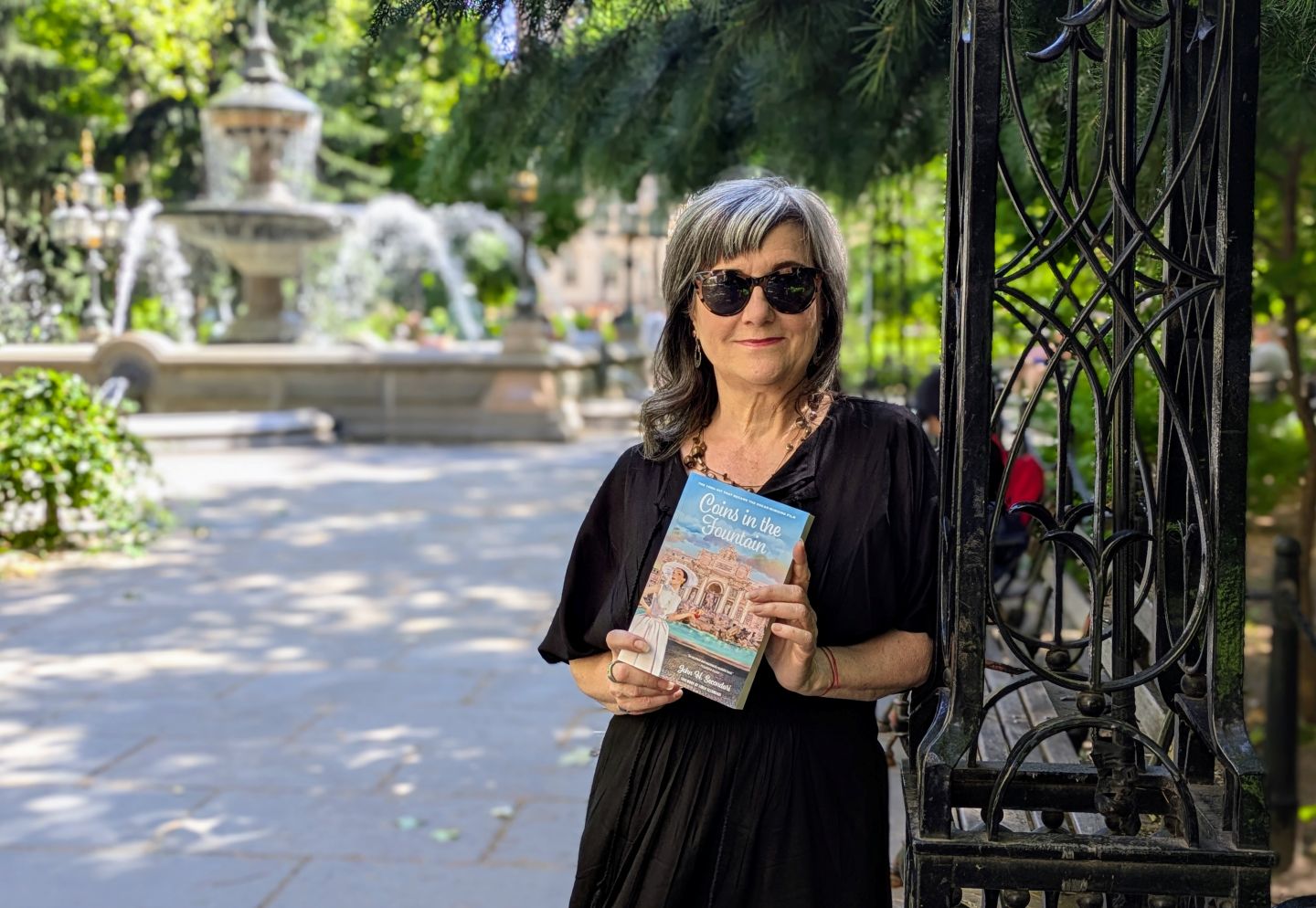
More than 70 years ago, just after World War II, John H. Secondari wrote a novel about four American women seeking adventure and inspiration in the romance of Rome. “Coins in the Fountain,” published in 1952, would go on to be a bestseller and a 1954 Hollywood film — “Three Coins in the Fountain” — that made the Trevi fountain an international icon.
Now his daughter, Tribecan Linda Secondari, has reissued the novel for the first time in seven decades through her own publishing imprint on Murray Street. The new edition includes a foreword from Linda plus Italian cocktail and cicchetti recipes, “because this book deserves to be read with an Aperol Spritz,” Linda notes. (Buy it on Bookshop.com; see a couple recipes below.)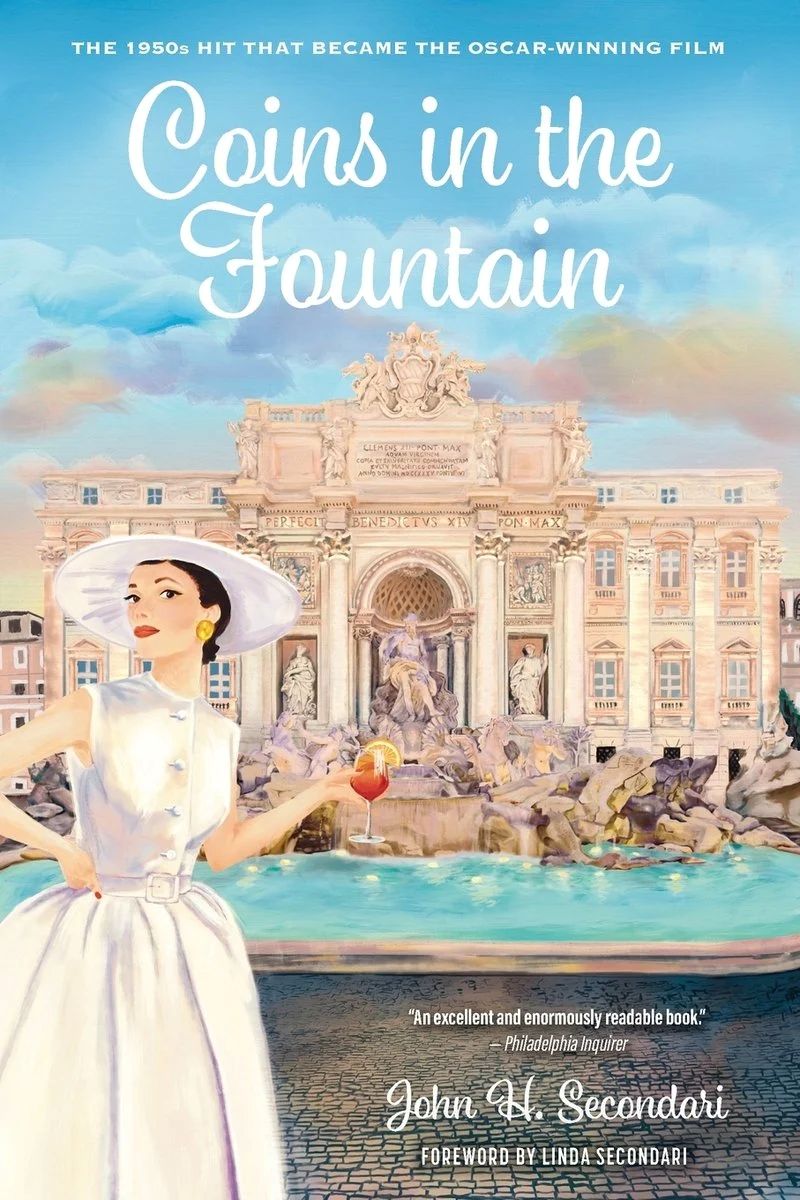
“The book has been out of print my whole life — in my family we jealously guarded the few copies we had,” Linda said. “My goal was just to introduce him to the conversation. He’s from a generation of people who aren’t digitized.”
Linda has been in publishing her entire career — she is the creative director, publisher and the founder of Studiolo Secondari, a design and strategy publishing services studio — but it took years for her to finally get to her own project. She first had to digitize the book from pages that were aged and brittle — like potato chips, she said. Then she sought research help from the librarians at the NYPL New Amsterdam branch on Murray — she wanted to include the original reviews on the dust jacket, but they were worn off her copies.
The librarians dug out reviews from The Philadelphia Inquirer among others, as well as a feature from The New Yorker from 1955 saying how the movie was inspiring so much coin tossing, one fountain in Connecticut was clearing $300 a month. By making a request for the material, the library digitized it; already she’s seen Google searches for her father move up the ranks and he has a Goodreads page. “That’s really what I wanted out of it,” Linda said.
The novel follows four American women — Priscilla, Anita, Virginia and Theresa — who “share an apartment, a hunger for adventure, and a hope that Rome might change everything.” The women confront love, missteps, heartbreak and self-discovery — while Rome supplies the cafés, crowded streets, ruins and fountains as a glamorous backdrop. Before the novel, tossing coins into the fountain was not a thing; the movie changed all of that.
John Secondari was an American writer, journalist, war veteran and television producer — but he was born in 1919 in Rome, which is how this all gets its start. He earned his bachelor’s from Fordham in 1939 and a master’s in journalism from Columbia Journalism School in 1940. During World War II, he enlisted in the U.S. Army, where he commanded both a reconnaissance unit and a tank company in combat across France, Germany and Austria.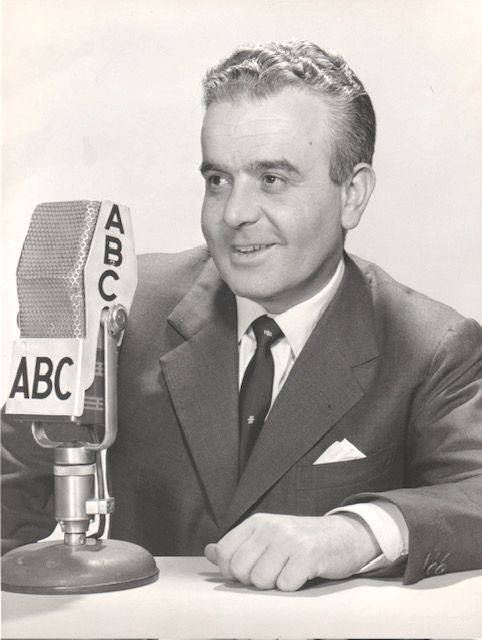
After the war, he served on the staff of General Mark W. Clark in Vienna and was discharged in 1946 with the rank of captain. Secondari returned to Italy as a journalist and public information specialist, working as a reporter for the Rome Daily American and a foreign correspondent for CBS. He then would go on to serve as ABC Television’s founding Washington bureau chief and White House correspondent. Over the course of his career, he received more than 20 Emmy nominations, three Peabody Awards, and Italy’s Guglielmo Marconi World Television Award.
But he died when Linda was just 9, in 1975. The novel was one of the things that connected her to him all these years.
“It is very bittersweet to read the words of a man that I barely remember,” she said when we met in City Hall Park. “But it’s been an opportunity to enter into a dialog with him as a man — as a person.”
Even some of the recipes are drawn directly from family tradition. In the Secondari home, food and storytelling were inseparable.
“It’s a story about a literary legacy,” Linda writes in the forward, “a daughter honoring her father’s work, and a full-circle moment that’s taken a lifetime to arrive.”
The Garibaldi
Named for the unifier of Italy—bright, bittersweet, and surprisingly smooth.
1 oz Campari
Fresh orange juice (ideally hand-squeezed)
Fill a highball glass with ice. Add Campari and top with orange juice.
Stir gently. Garnish with an orange wedge.
Sgroppino al Limone
The chicest of palate cleansers—somewhere between a cocktail and dessert.
1 scoop lemon sorbet
1 oz vodka
2–3 oz chilled prosecco
Whisk or blend gently until frothy. Serve in a coupe or flute.
2 Comments
Comment:
Medium rectangle #1 (top)

Right column rectangle ads


Mega rectangle

Restaurant guide icon


There aren’t many literary characters with my name … I might read it for that reason alone! Plus I’ve been enjoying a lot of early-to-mid-2th century novels with omniscient narrators as an alternative to the popular contemporary approach told from multiple POVs.
Good to see this back in print. Secondari was a fine mid-20th Century author who wrote novels with entertainment value was balanced with a solid literary foundation. Could be great for romance readers looking for something a little different than the usual rom-com offerings.