

Left rectangle ads redesigned


History of Tribeca Buildings
312-322 Canal will be redeveloped as residential
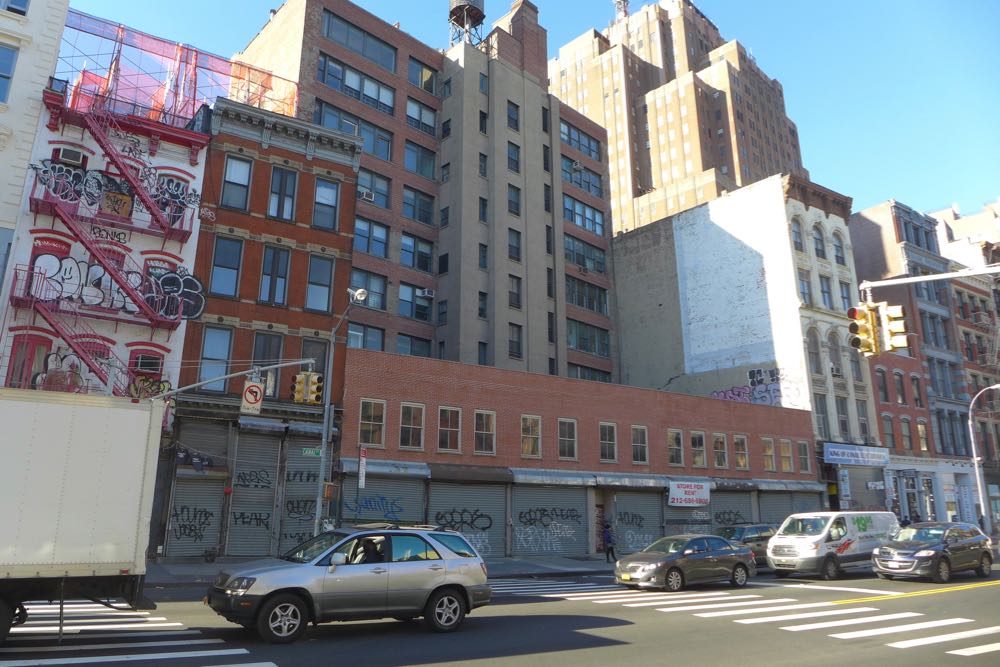
In more Canal Street news, a stretch of the south side of Canal between Broadway and Church just east of the old Pearl Paint building, is being redeveloped for residential by Trans World Equities — resurrecting a very similar plan approved by Landmarks in 2018. The building was originally designed as nine stories; it is now seven, though the seventh floor is set back. (And the history of the site with this team goes back even further, to 2011.)
The architects are Paul A. Castrucci, as they were 15 years ago — I am waiting on permission to publish the more recent renderings, but you can catch them here on Yimby in the meantime. (I don’t mess with those sorts of things after being sued a couple times!) The ones below are from the 2018 plan and show the approved terracotta facade.
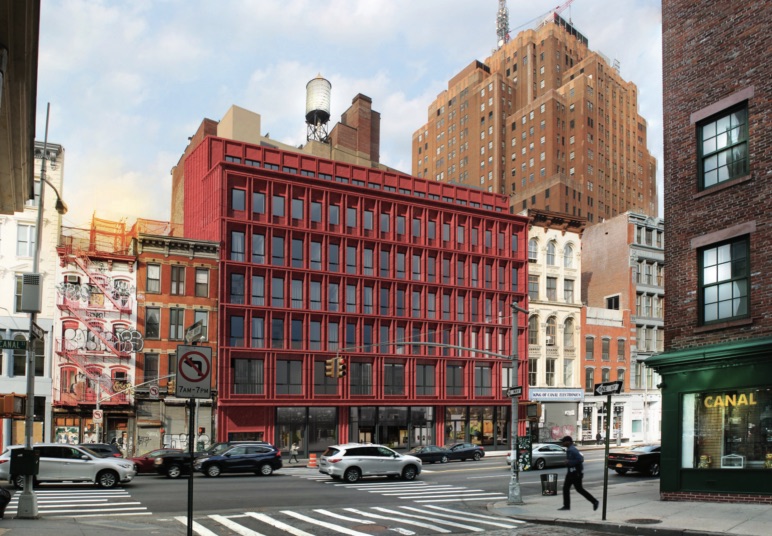
2018 plan by Paul A. Castrucci Architects
The site is in the Tribeca East Historic District and makes up the top of the original “triangle” named Tribeca. The six, 25-foot-wide buildings were built in 1825-26 for Isaac Lawrence (d. 1841), a shipping merchant and prominent American banker. By 1851, the buildings had been converted for commercial use; the occupants during that year sold umbrellas and corsets. In 1892-93 the building was raised to four stories and contained ground-story shops, second-story storage space, and a dwelling at the third and fourth stories. Between 1962 and 1965, Via Canalis hired architect Abraham L. Seiden to remove the upper two stories. The facades are brick laid in Flemish bond (now painted).
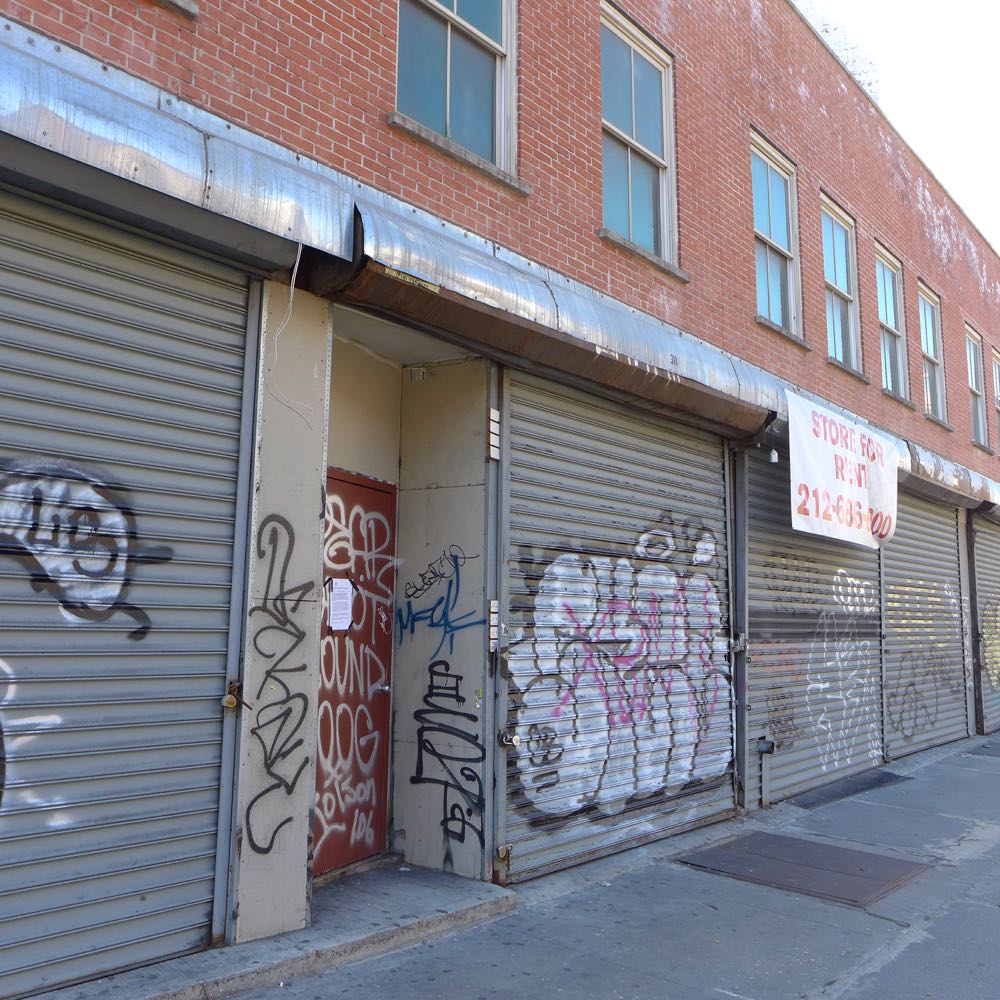
The architects describe their design this way: “Like the grand commercial stores of the 19th century, the trabeated [horizontal beams] facade of 312-322 Canal Street is ordered by an elegant repetition of ‘posts’ and ‘beams’ creating a unified expression. This repetition is reinforced through our priority to create a deep façade, well over a foot from terracotta fin to window, that allows for the play of light and shadow characteristic of many of these earlier cast-iron architectural landmarks.”
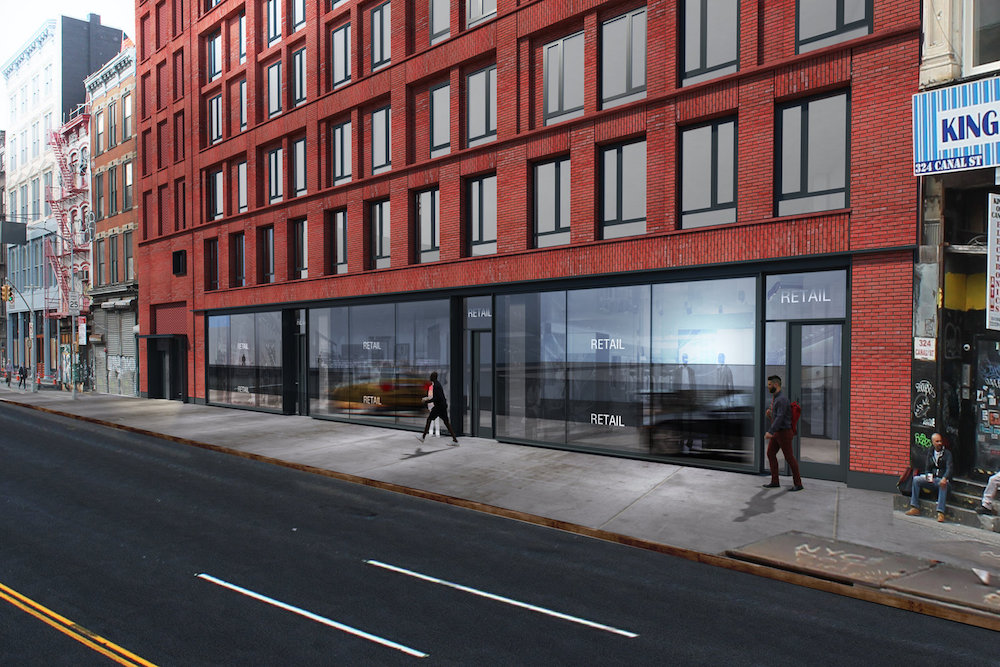
2018 plan by Paul A. Castrucci Architects
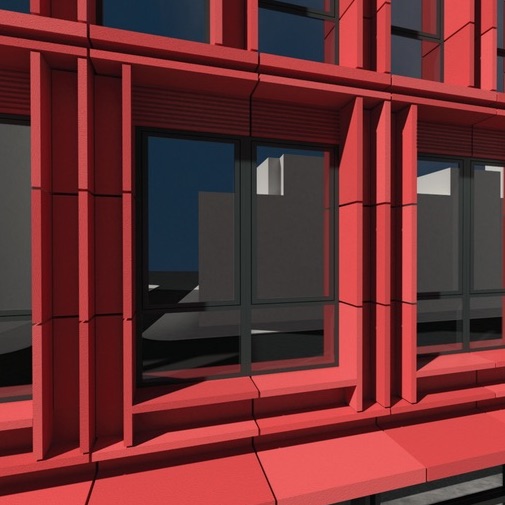
2018 plan by Paul A. Castrucci Architects
5 Comments
Comment:
Medium rectangle #1 (top)

Right column rectangle ads


Mega rectangle

Restaurant guide icon

Looks good. However, who would want to pay Tribeca prices to live (or have a business) with the counterfeit bazaar occupying that entire block?
Agree with you but I think they are making a long term bet it won’t maintain its current state of chaos forever
It won’t go away unless people spend the time protesting and writing to elected officials, it’s been six years after all. Calling 911 is a joke. Daily show raids is a waste of tax money. Spain took care of the Ceuta crisis in one week and look at us…
Real estate ads never show real pictures of the neighborhood and buyers nowadays are often from out of town or out of the country.
Part of the problems is residents from west of Church don’t feel it’s part of ‘Tribeca’ therefore has no impact on their real estate value.
It’s a good idea to start referring to the counterfeit bazaar as a Tribecan problem.
Ironic that anyone would say those areas are not “real” Tribeca, since the original “Triangle” of Tri-beca is right there.
Per Wikipedia: “The name “Tribeca” was coined in the early 1970s and originally applied to the narrower area bounded by Broadway and Canal, Lispenard, and Church Streets, which appears to be a triangle on city planning maps.”
Beyond that historical note, however, no one should assume their block or street is safe from this chaos. It’s spreading like wildfire through the neighborhood, through Soho, Chinatown, and other parts of the city.
““The name “Tribeca” was coined in the early 1970s and originally applied to the narrower area bounded by Broadway and Canal, Lispenard, and Church Streets, which appears to be a triangle on city planning maps.””
More details on that:
In the early 1970s, TrBeCa pioneers tried to get the city to change the zoning to legalize residential, similar to what the artists in SoHo to the north had done.
One group of artists who lived on Lispenard Street between Broadway and Church called their group the Triangle Below Canal Association, and submitted testimony to the Department of City Planning under that name.
A reporter from the New York Times got a hold of their filing and assumed that the name for the block association comprised the entire neighborhood and reported it as such.
With “the newspaper of record” declaring it as such, the name caught on and has remained