


Left rectangle ads redesigned

History of Tribeca Buildings
McDonald’s site on Broadway is finally sold
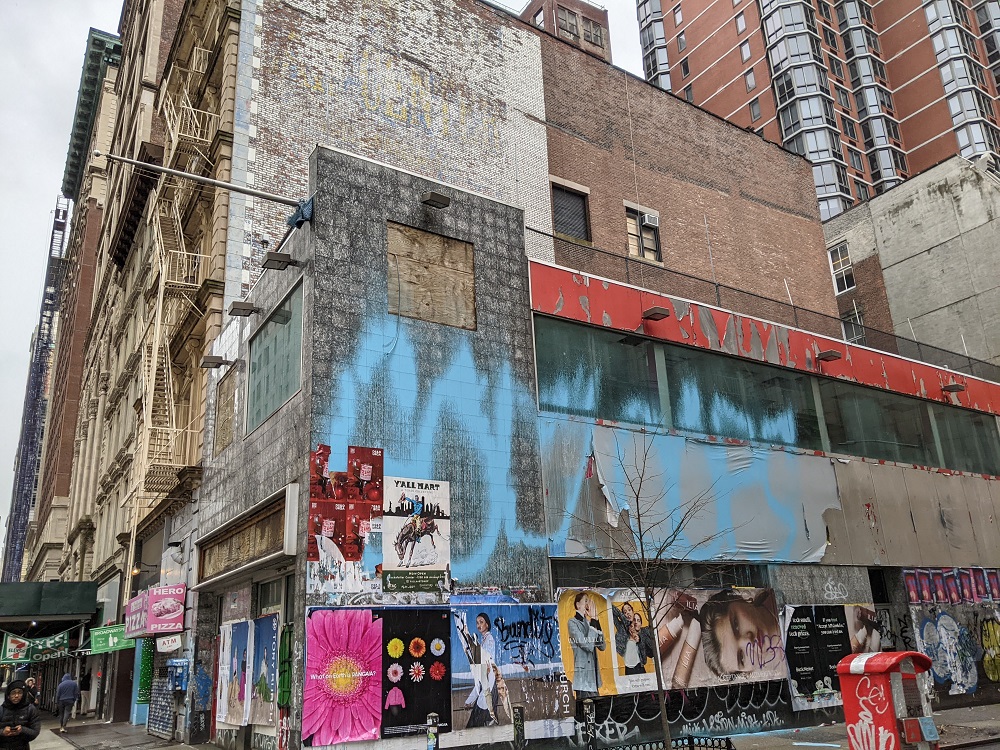
The former McDonald’s at what is 2 Thomas street aka 317 Broadway has just sold, Crain’s reported. Shabse Fuchs acquired the lot from United American Land, which is developing 277 Canal on Broadway, for $14 million.
But it looks like there is also a waiver of declaration of zoning lot restrictions filed with the city on August 6 for 315 Broadway, the landmark next door that was also owned by United American Land. This allows multiple tax lots to merge into a single zoning lot. That makes a lot more sense: UAL received approvals from the Landmarks Commission in 2020 to develop the corner (317) as well as the landmark next door (315), the “commercial palace” that once housed Hagstrom Maps.
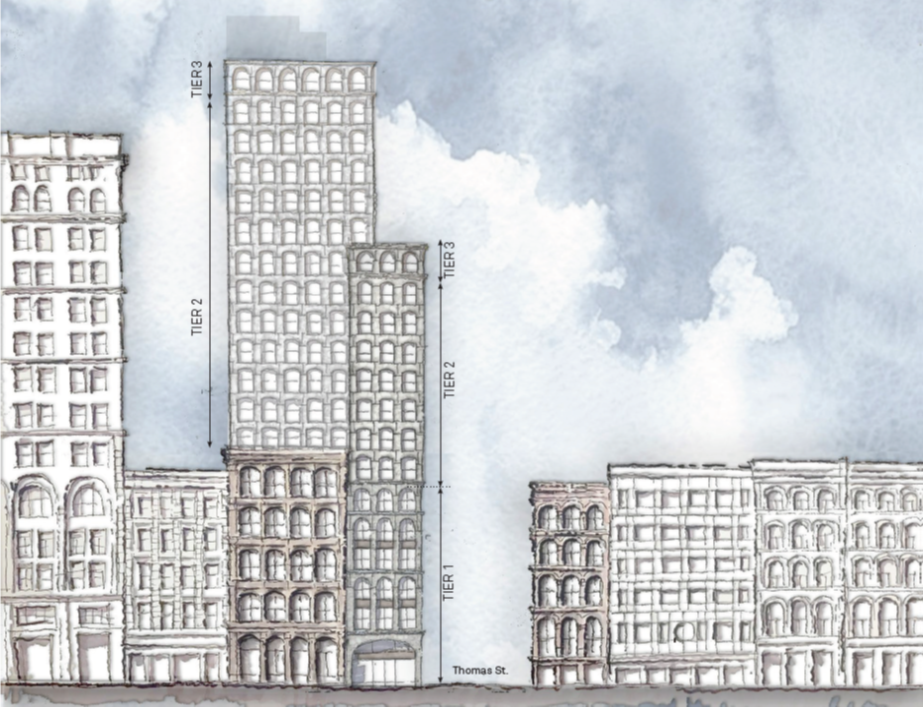
Rendering by Morris Adjmi Architects for 2020 plan for United American Land
The renderings here are from that 2020 proposal to Landmarks. The current project description with the Department of Buildings is a 204-foot, 21-story mixed-use building.
The lots together are 6800 square feet; 315 is a five-story cast iron and marble structure that will have to be preserved. (An excerpt from the designation report is below.)
McDonald’s left that corner in 2018; the site has been for sale since 2024.
From the Landmarks designation report for 315 Broadway:
The 315 Broadway Building is palazzo inspired commercial store and loft building of the type that once lined Broadway and shaped the streetscapes of antebellum New York. Constructed as a speculative investment by the retired linen merchant Thomas Suffern in early 1861, 315 Broadway is a fine example of the commercial palaces that were built in the 1850s and 1860s throughout the wholesale dry goods district now known as Tribeca.
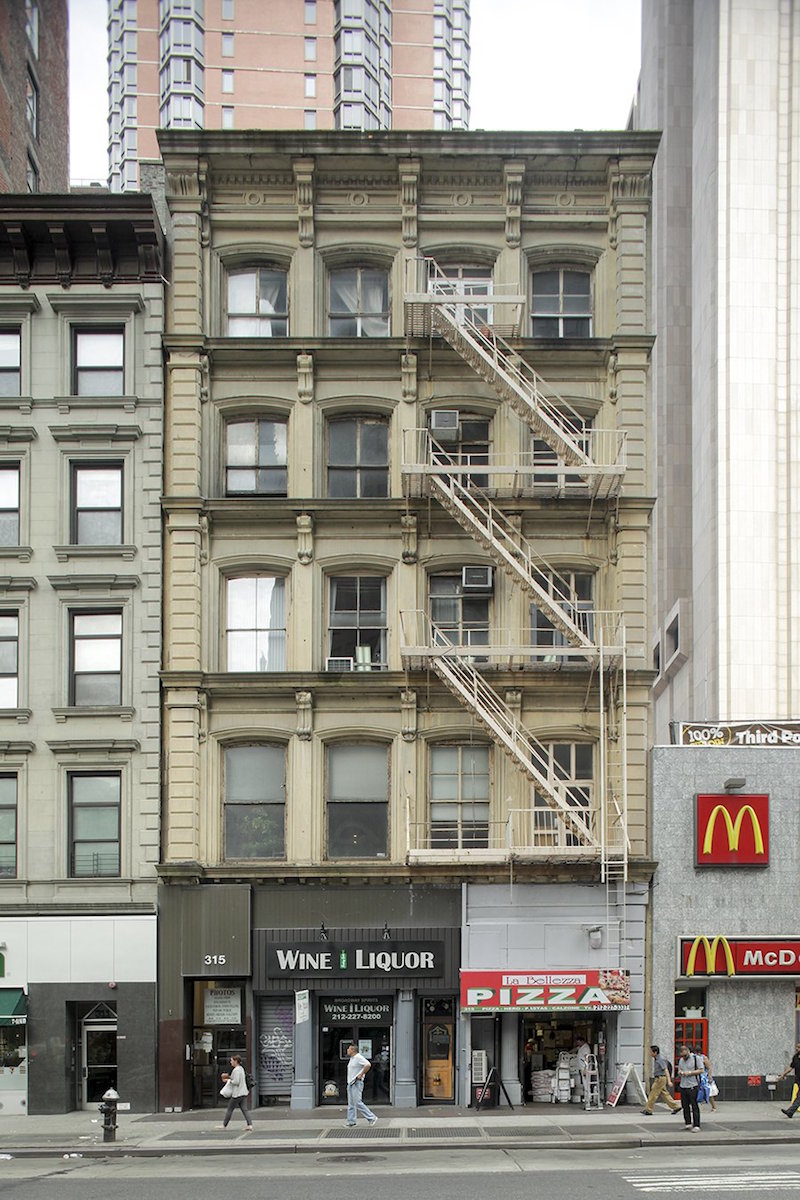
315 Broadway is distinguished by its structural clarity, inventive detailing, and ornament. The five-story building features a marble façade with rusticated corner piers and bracketed cornices, engaged cast iron columns on pedestal bases, and a cast iron storefront that is currently partially concealed. In Manhattan, the palazzo-inspired store and loft was first brought to New York by architects Joseph Trench and John Butler Snook in the A.T. Stewart Store (1845-1846), an instant attraction and enormous commercial success that set a precedent for stone-clad stores and lofts throughout Tribeca.
The Italian Renaissance palazzo was thought to be a particularly appropriate model for commercial buildings because of its associations with merchant princes. Few of these commercial palaces still exist on Broadway south of Franklin Street. 315 Broadway has been leased by dozens of tenants since its construction, including Hartley & Graham Arms and Ammunition and its subsidiary, Remington Arms Company, from 1892-1912, and Hagstrom Company, Inc., a cartography and publishing firm that designed and printed the official New York City subway map during its tenancy, from 1943-1956.
1 Comment
Comment:
Medium rectangle #1 (top)

Right column rectangle ads

Mega rectangle

Restaurant guide icon



I am not enthusiastic about imposing a 21 story building on that corner. However, the existing building is an eyesore and a blight – words that are sometimes overused, but in this case are accurate. Replacing a rundown, graffiti covered building that attracts vagrants and encourages loitering seems tolerable, even if it means a taller structure.