


Left rectangle ads redesigned
History of Tribeca Buildings
Books of Tribeca: Northern Lights and Rocket Flights: My Years at Poker Flat Research Range
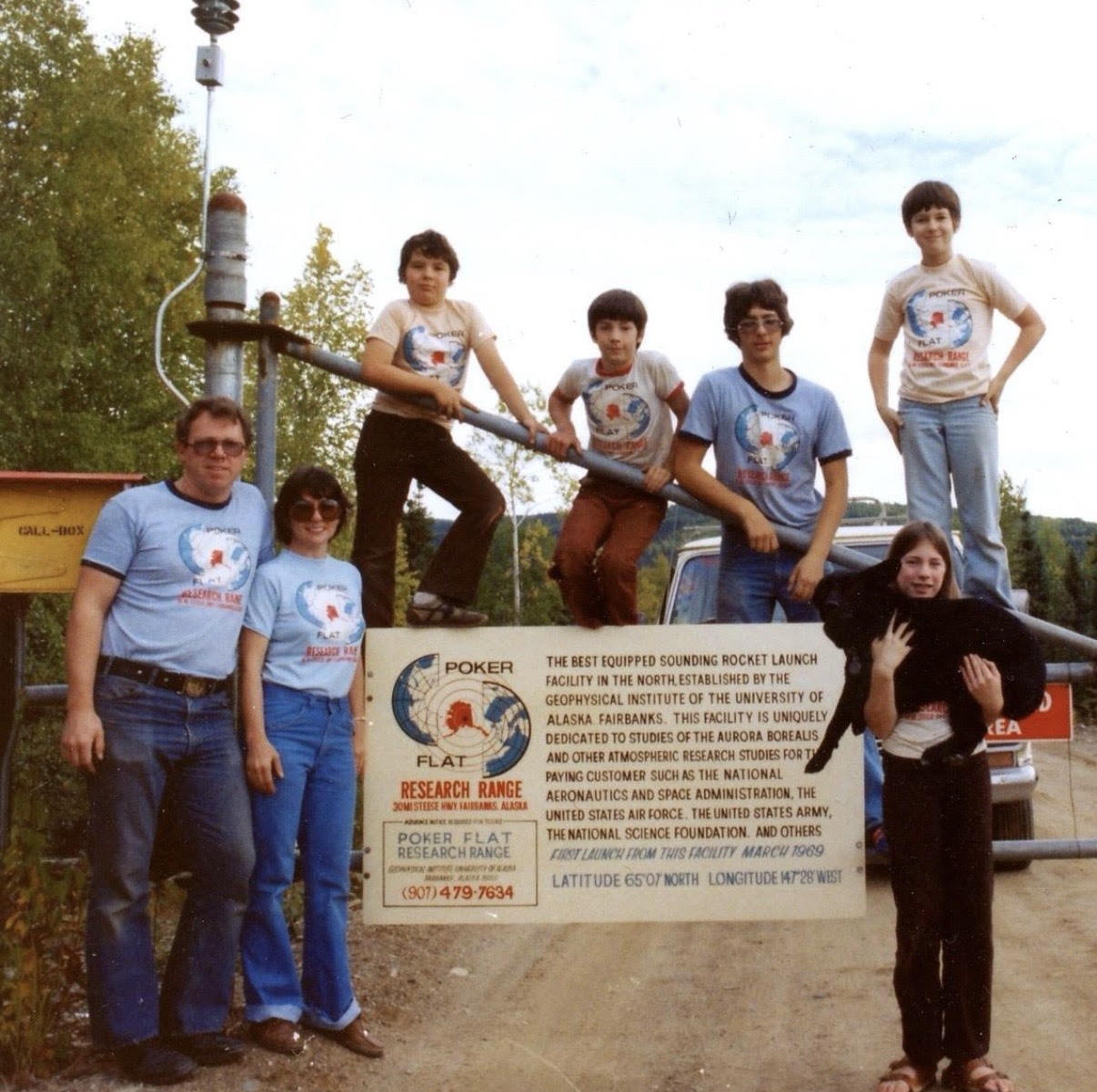
The blended family in June 1981
When Tribecan Kris Brown’s father, Neal Brown, died five years ago, he and his sister were tasked with sorting through his belongings — the physical remnants of an extraordinary life. Neal was literally a rocket scientist, and in the 1960s helped establish Poker Flat Research Range in Alaska, the world’s only university-owned rocket launching research facility that remains active today. He was at the center of the country’s development of every rocket program during the Cold War, at the forefront of the often-overlooked role Alaska has played in space and atmospheric science, and spent decades studying the Northern Lights. He married twice, raising five children in Fairbanks. He was an accomplished trombonist. They knew there would be a lot to unpack.
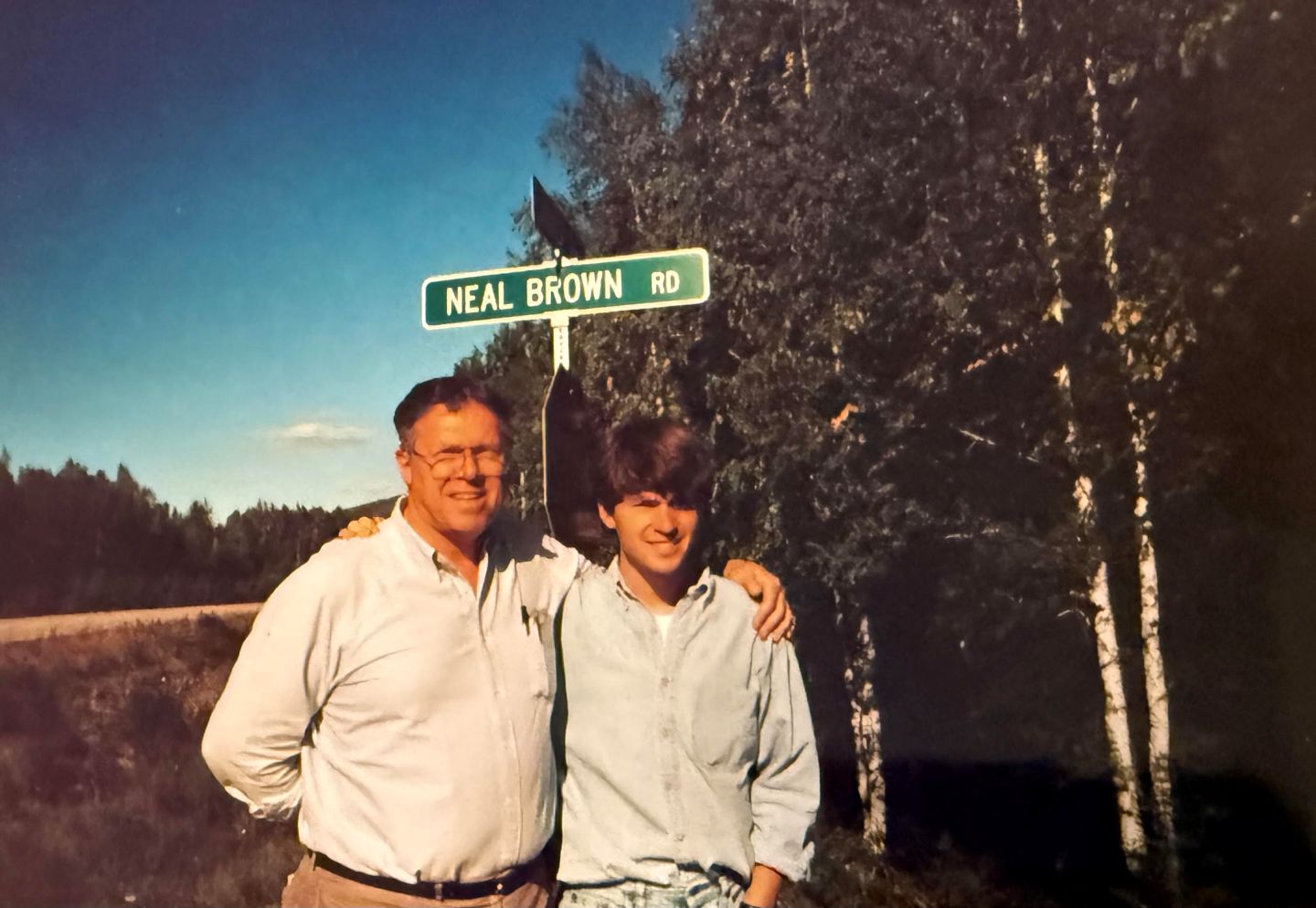
Neal and Kris at the entrance to Poker Flat in July 1990
But they never expected to discover 1,100 pages of his handwritten stories and reflections on his life’s events, reaching back to his childhood in Idaho — essentially a memoir. They knew then they had to publish it.
Over four years, Kris and his sister, Melody, and their lifelong friend Sue Mitchell, a writer for the Geophysical Institute at University of Alaska Fairbanks, condensed the pages into a 270-page book while trying to preserve their father’s voice and spirit. The result, published by Springer Nature this summer, is “Northern Lights and Rocket Flights: My Years at Poker Flat Research Range.” You can purchase it as a download or hardcover here.
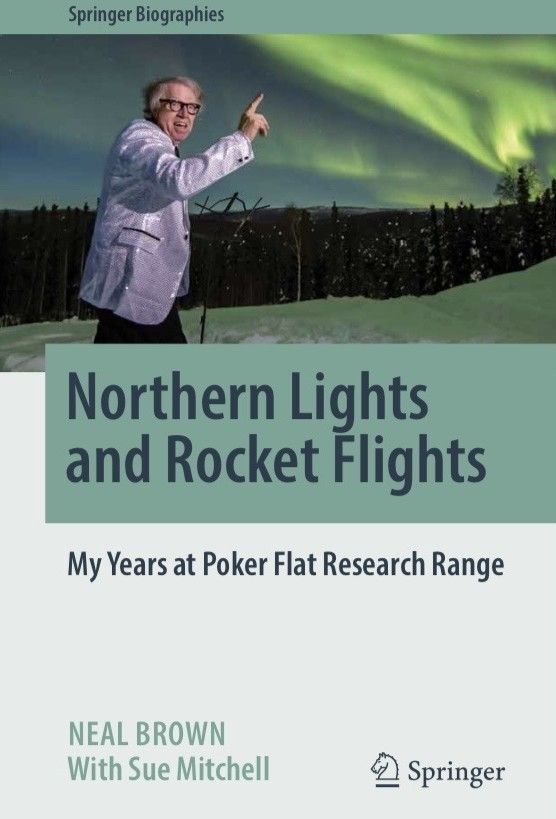 Kris sent it to me with this note: “If you’re interested in space exploration, Alaska, the history of science, or simply the story of someone who spent his life pursuing wonder, I’d be honored if you took a look.” He added, “Some sections are technical, but it’s also full of adventure, humor and the very human story of building a rocket range outside my hometown of Fairbanks, Alaska.”
Neal Brown grew up on a wheat and pea farm outside Moscow, Idaho, and spent a lot of his childhood with a ham radio and backyard rocketry. (His uncle was a mentor and helped spark his interest in radios, batteries and science fiction.) That passion took him to Washington State University and landed him his first job at NASA in 1961, working in Thule, Greenland, and Mountain View, California.
In 1971, he became the first director of the brand-new Poker Flat Research Range, helping space physicists launch more than 200 rockets. After more than two decades there at University of Alaska Fairbanks’s Geophysical Institute, he then took a sabbatical at the University of Colorado in Boulder and began teaching. Retirement meant the founding of the Alaska Space Camp, which brought hundreds of kids to Alaska for a week of adventure.
Here are a couple excerpts from the memoir for a taste:
ROCKETS AND WALRUS PENISES
One fine spring day in 1973, I received a telephone call from Milt Peek at Los Alamos National Laboratory. His management had figured out what an oosik was, and were near apoplectic that it was the code name for a rocket launch in a refereed journal article about to be published. When they said it was not an approved Los Alamos code name, he told them that it was a University of Alaska Geophysical Institute project he had partnered with.
Oosik was a hugely successful project involving the rocket, explosives, and a shaped charge of barium onboard rocket payloads launched from Poker Flat, driven by Neil Davis and Gene Wescott at the Geophysical Institute. We had launched it in March of 1972. Ted Lehne, newscaster and owner of Channel 11 TV and a radio station in Fairbanks, broadcast the launch live.
At the time, it had been postulated that the rocket might create a magnificent aurora, and indeed an aurora suddenly filled the sky with color and motion for the next 10 min. As it turned out, this was apparently a fluke. We were never successful again, and theoretical work soon came out stating we never could have been.
I assured Milt that I would call him back with a set of plausible science words for the acronym OOSIK within the next hour. After I hung up, I turned to Gil Moore and explained my dilemma. Gil asked how we had come up with that name to begin with. I told him that a couple of years before, Milt and I had worked several nights together in the Ester Dome Observatory west of Fairbanks waiting for an aurora rocket to be launched from Poker Flat. Milt had said, “You know, Neal, if we do create a shaped barium charge and fly it aboard a rocket on this proposed project, what do you suppose we should call it?”
I was at the time a graduate student with no connection with the rocket work, but I replied without hesitation, “Oosik.” I told Milt with a smile on my face that it would be like a giant ejaculation of barium in the skies over Alaska, and oosik is the name of the penis bone of a walrus. We laughed, but as time went by and the project came to be, the name Oosik just stuck.
Gil was a good friend with many years of rocketry experience: he was at White Sands when some of the first German V-2 rockets captured at the end of World War II were assembled and flown. He worked for Thiokol rocket motor company and was now the head of a division he created called Astromet. He was on a first-name basis with the head of NASA and several astronauts. He knew how to create acronyms.
Gil walked about 30 feet through the hallway to the door, turned, and with a big smile on his face said, “Optical Observation of Sudden Induced Kinetics.” I picked up the telephone and tried to reach Neil Davis, but he was unavailable. I called his co-principal investigator on this project, Gene Wescott. Gene answered, and I briefly explained our dilemma and Gil’s solution. Gene said it was fine with him. I called Milt and told him what we had come up with and Gene’s approval. Milt said, “Thanks, I think this will do it.”
In 1978 Keith Mather asked me to write the feature article for the 1979 Geophysical Institute annual report celebrating the tenth anniversary of the first launch from Poker Flat. Peggy Dace Boyd was working for me and assembled our submission from what little I had written.
While Keith was editing our submission, he called Neil into his office, and they had a good laugh about how the words describing the acronym came about. It had been a surprising revelation to Keith, and he took it well since everything had come out fine in the end.
POKER FLAT’S LGBT COFFEE BREAKS
During a rocket campaign at Poker Flat in 1974, one visiting engineer — an athletic, good-natured professional from a major aerospace company — made a strong first impression. He was tall, wore glasses, carried himself with quiet confidence, and was well-liked by the local team for his easygoing manner and technical competence.
However, after his team’s launch had taken place, several members of the Poker Flat crew overheard him making dismissive remarks about the LGBT community during coffee breaks in the Poker Inn kitchen. In response, a few of the crew decided to challenge his assumptions — not through confrontation but by staging a bit of unexpected theater.
Two of the male team members, known for their quick wit and camaraderie, began playfully presenting themselves as an affectionate couple. Their performance included light touches, cheek kisses, and lovingly exaggerated remarks. The rest of the crew went along with the act, treating it as completely ordinary and even adding friendly comments about what great family men the pair were.
The visitor’s discomfort became apparent. He often got up to refill his coffee or left the room altogether. The intent wasn’t to shame or humiliate, but to quietly remind him that Poker Flat was a place where respect for all people was the baseline — and that bigotry, however casually expressed, would not go unnoticed.
1 Comment
Comment:
Medium rectangle #1 (top)

Right column rectangle ads


Mega rectangle

Restaurant guide icon


A huge thank you to the Tribeca Citizen for this wonderful piece about my dad, Neal Brown, and Northern Lights and Rocket Flights. It means a great deal to see his story told here in the neighborhood I’ve called home for so many years. I’m especially grateful for the care you took in capturing not just the rockets and science, but his humor, curiosity, sense of adventure, and lifelong wonder at the world around him. Thank you for helping introduce Neal and Poker Flat to a few more people.