

Left rectangle ads redesigned

History of Tribeca Buildings
Art in Battery Park City: 100 Practices for a Changing Landscape
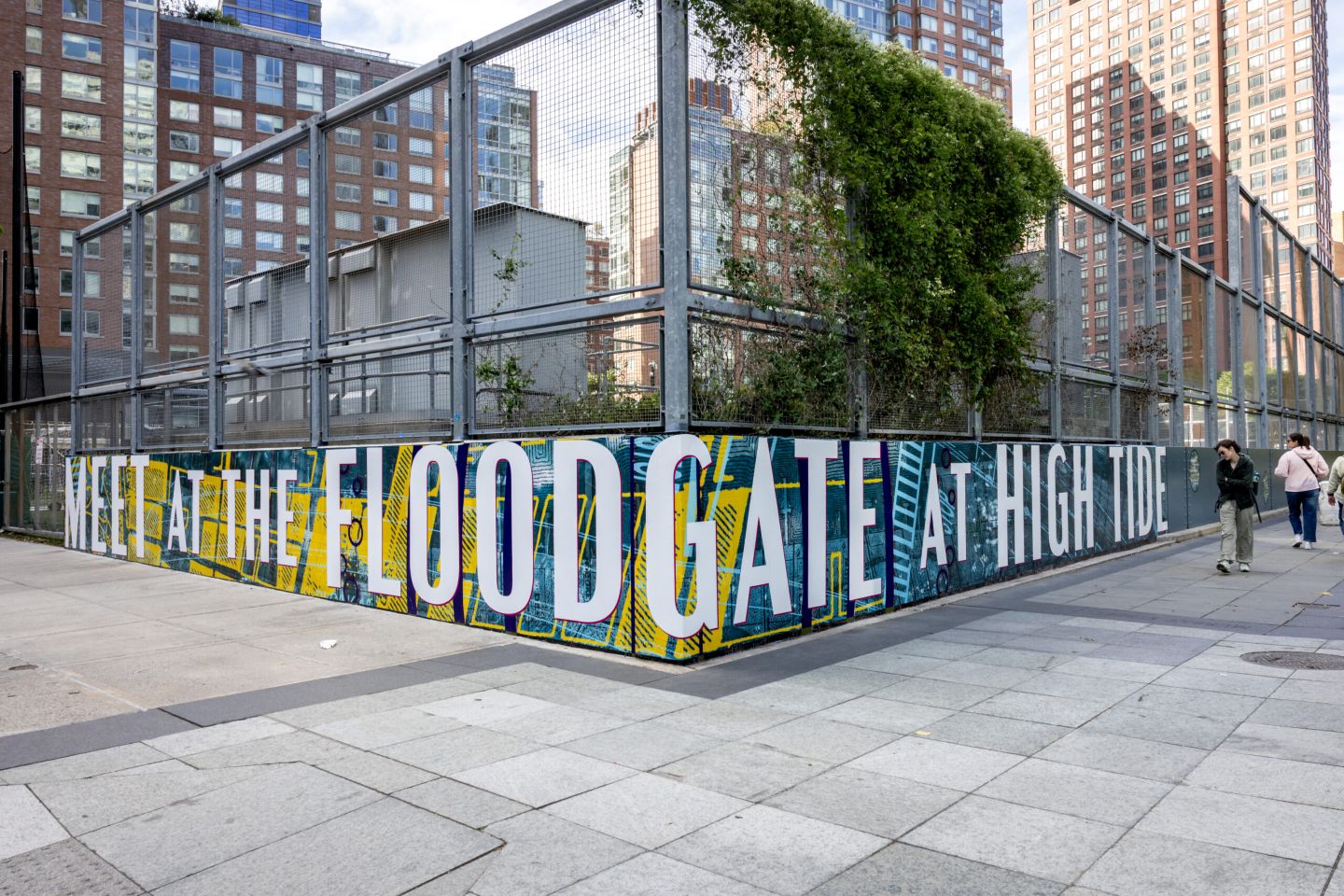
All photos by Walter Wlodarczyk
Artist Sarah Cameron Sunde has created an expansive, site-specific artwork in Battery Park City to acknowledge the changing landscape there due to climate pressures.
The installation has included murals, rituals and what Sunde calls “walkway provocations,” where passers-by are prompted to engage in conversation about the topics through prompts and questions. (Find those spots at Wagner Park, the handball court in Rockefeller and on the ball fields.) You can also respond with a text or voice mail to 917-284-8172, or leave your response in the contact form here.
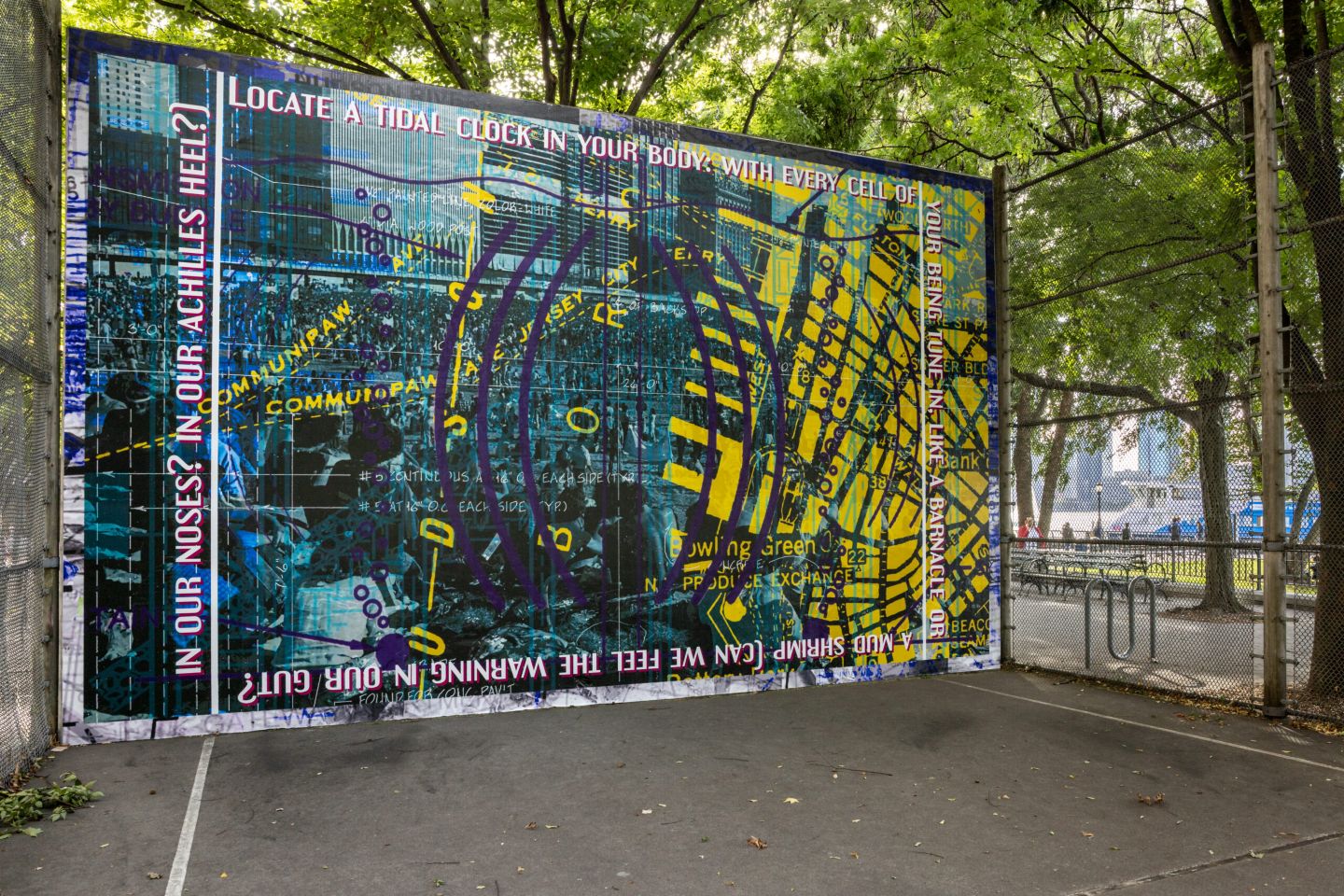
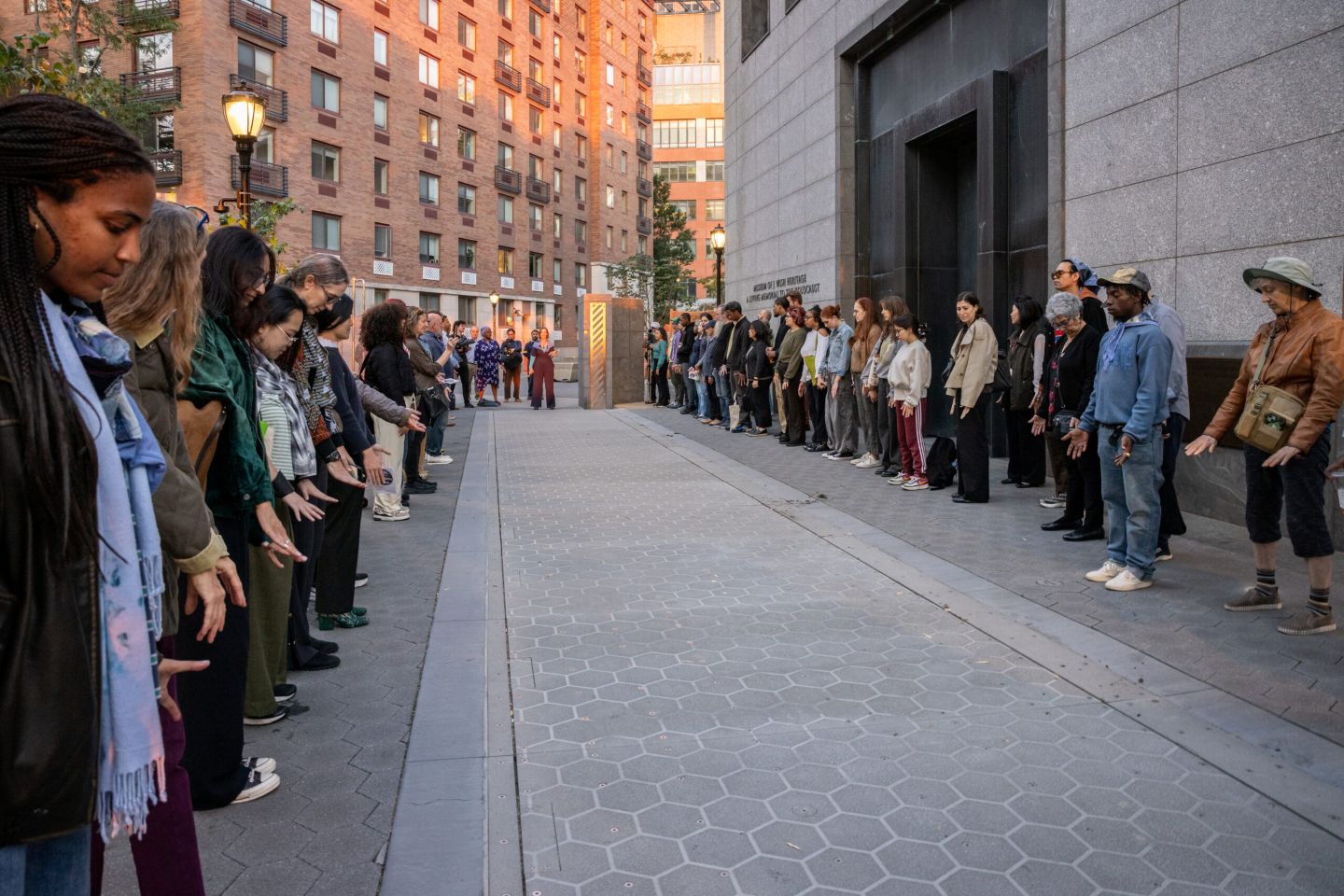
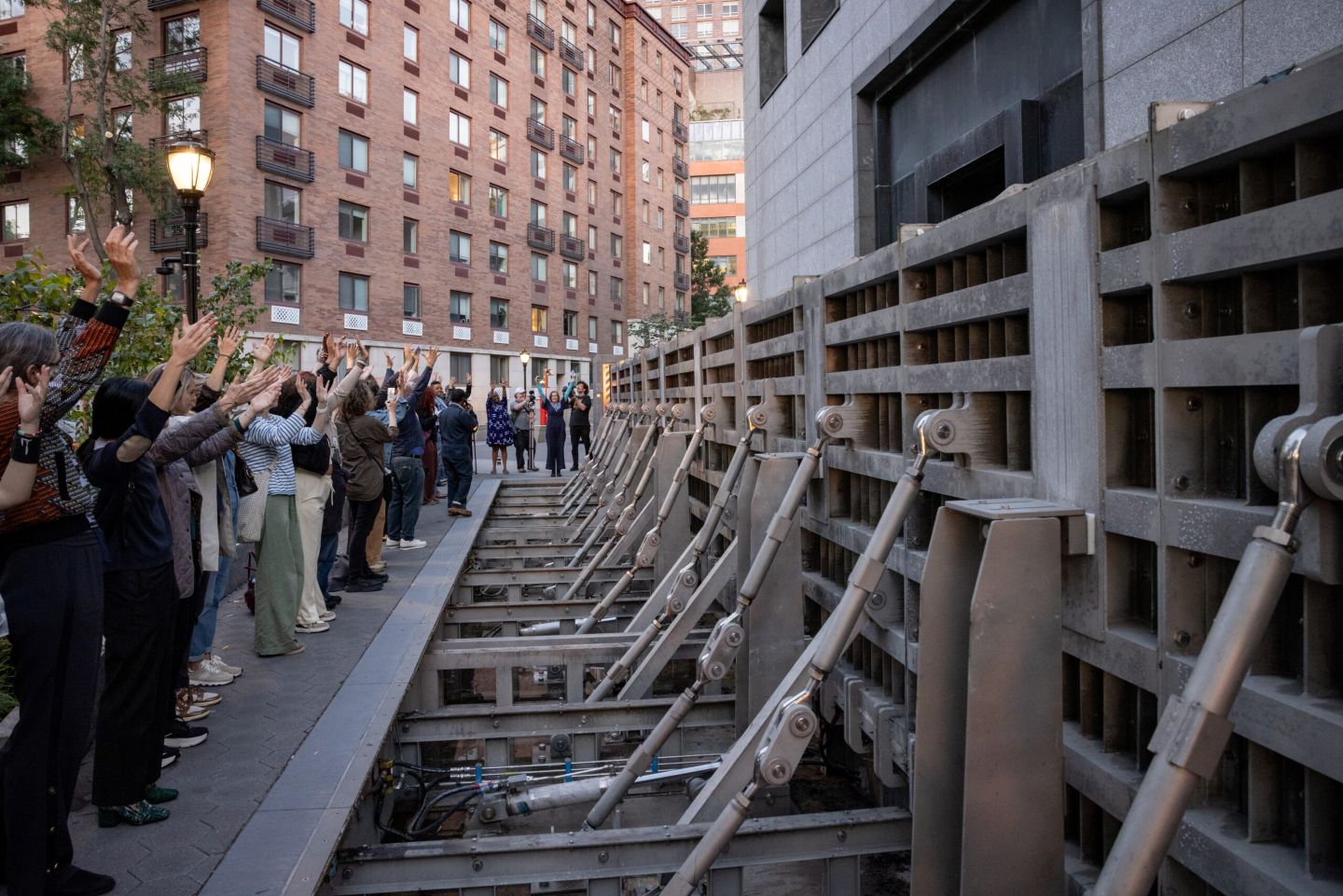
The project was launched in Climate Week and will stay there till the Battery Park City Authority says when — maybe November or December. It included a couple of artists talks and a Floodgate Ritual in September, where participants gathered at Wagner Park to witness the raising of one of the neighborhood’s new floodgates (photo below). All the materials used in the installation are aluminum and will be re-used.
“How do we practice for a changing landscape?” Sunde asks on her site, “A landscape that has already been changed by climate and human intervention, and one that will inevitably keep changing?”
Battery Park City was of course manmade to begin with, an engineered neighborhood created partly from the excavations of the World Trade Center starting in the 1970s. The state authority that manages it is in the middle of a massive — $1.7 billion as estimated — project to make it more resilient to flooding, in preparation for the next Hurricane Sandy.
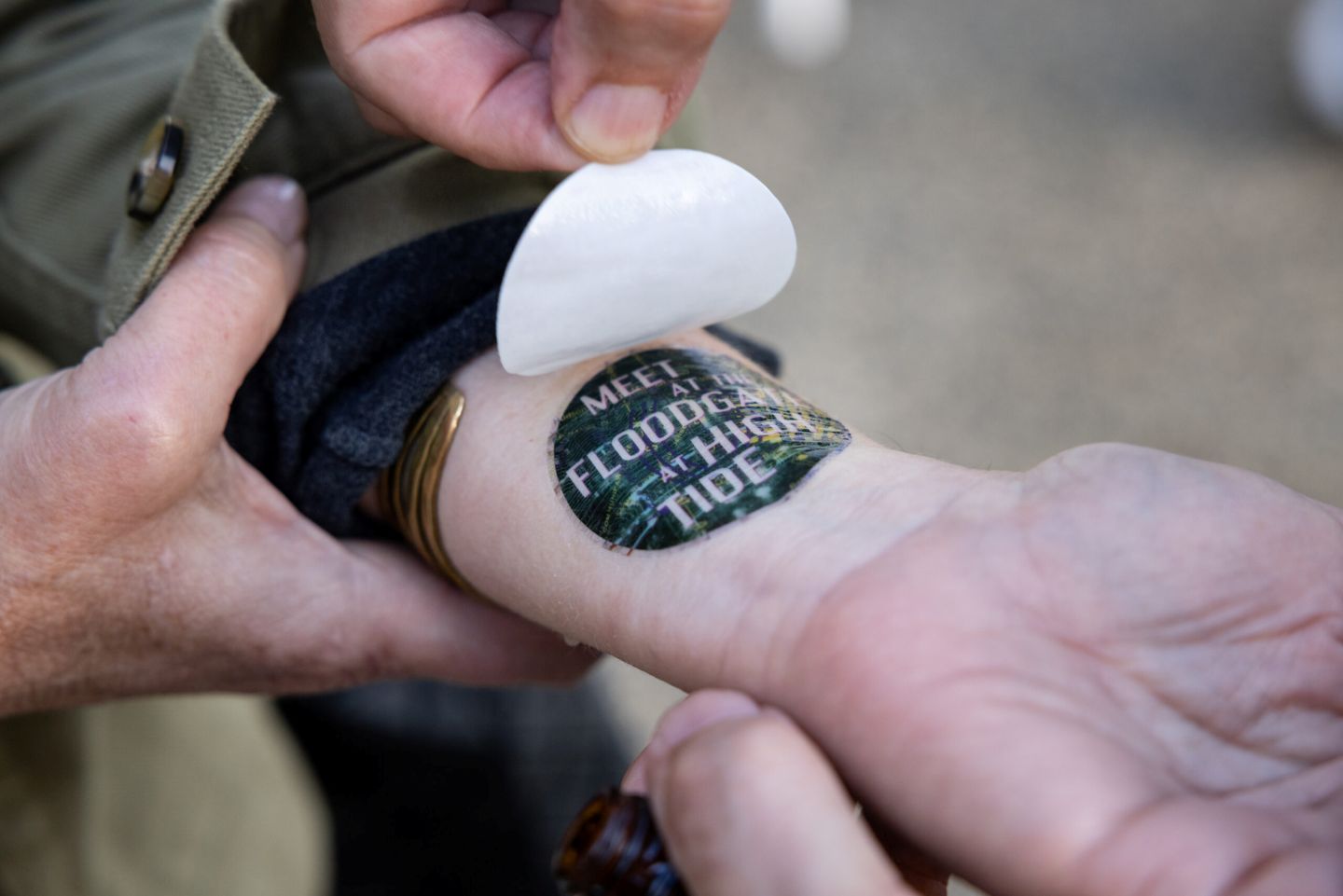
Sunde calls this work a “process of adaptation,” and created the installation for participants to consider the work going on now, as well as what came before in this very specific spot. “Rather than asking the public simply to learn about climate change,” she writes, “the project invites people to slow down, notice where they are, remember what has been here before, imagine what may come next, and consider how our bodies and communities might prepare for an uncertain future.”
Comment:
Medium rectangle #1 (top)
Right column rectangle ads

Mega rectangle
Restaurant guide icon