

Left rectangle ads redesigned

History of Tribeca Buildings
Artwork dedicated to Little Syria in Fidi
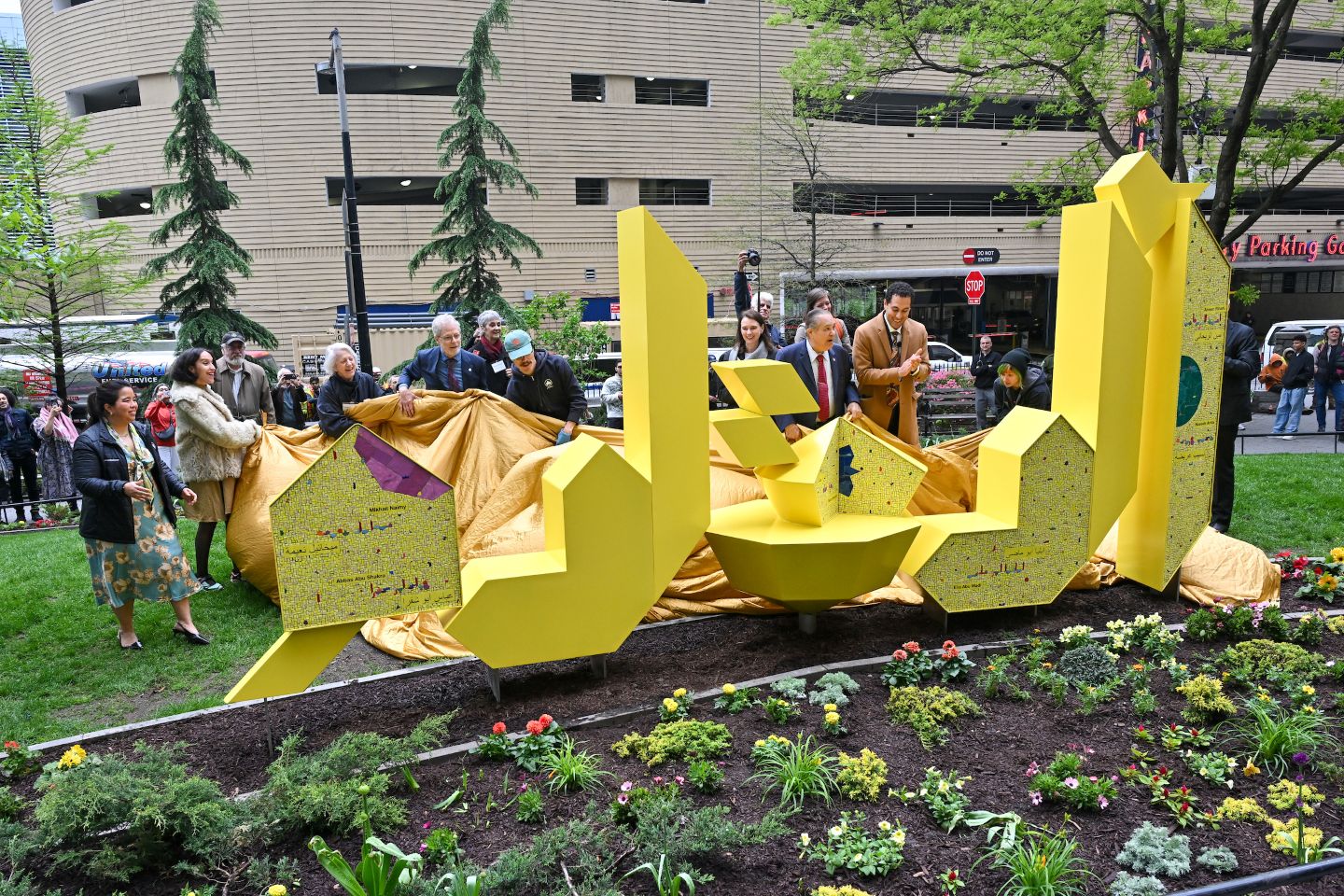
The Parks Department and the Washington Street Historical Society — an organization founded to preserve the history of the former Syrian settlement in Fidi — have unveiled a sculpture, in the works since 2017, that largely redesigns Elizabeth Berger Park, the plaza that opened in 2021.
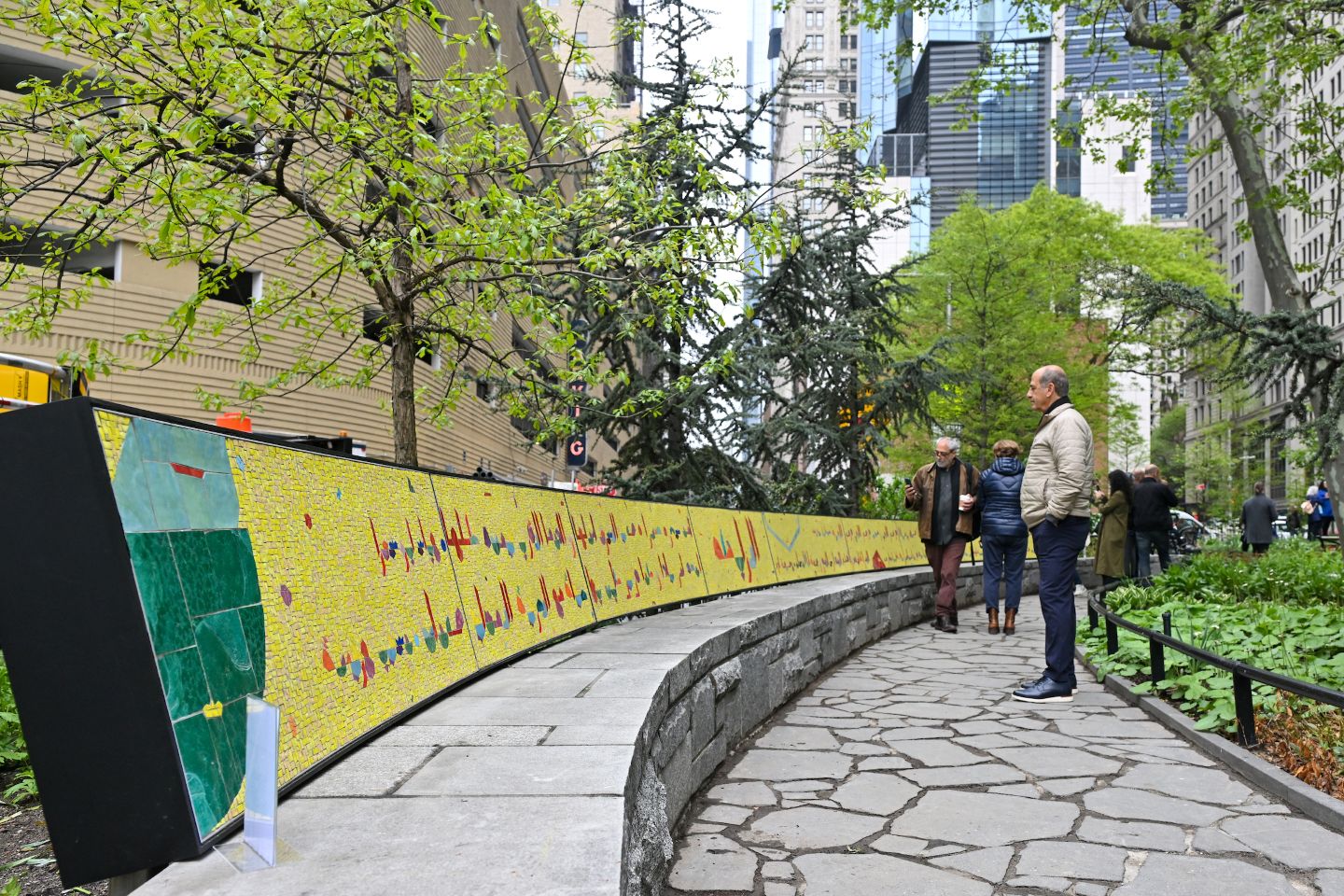
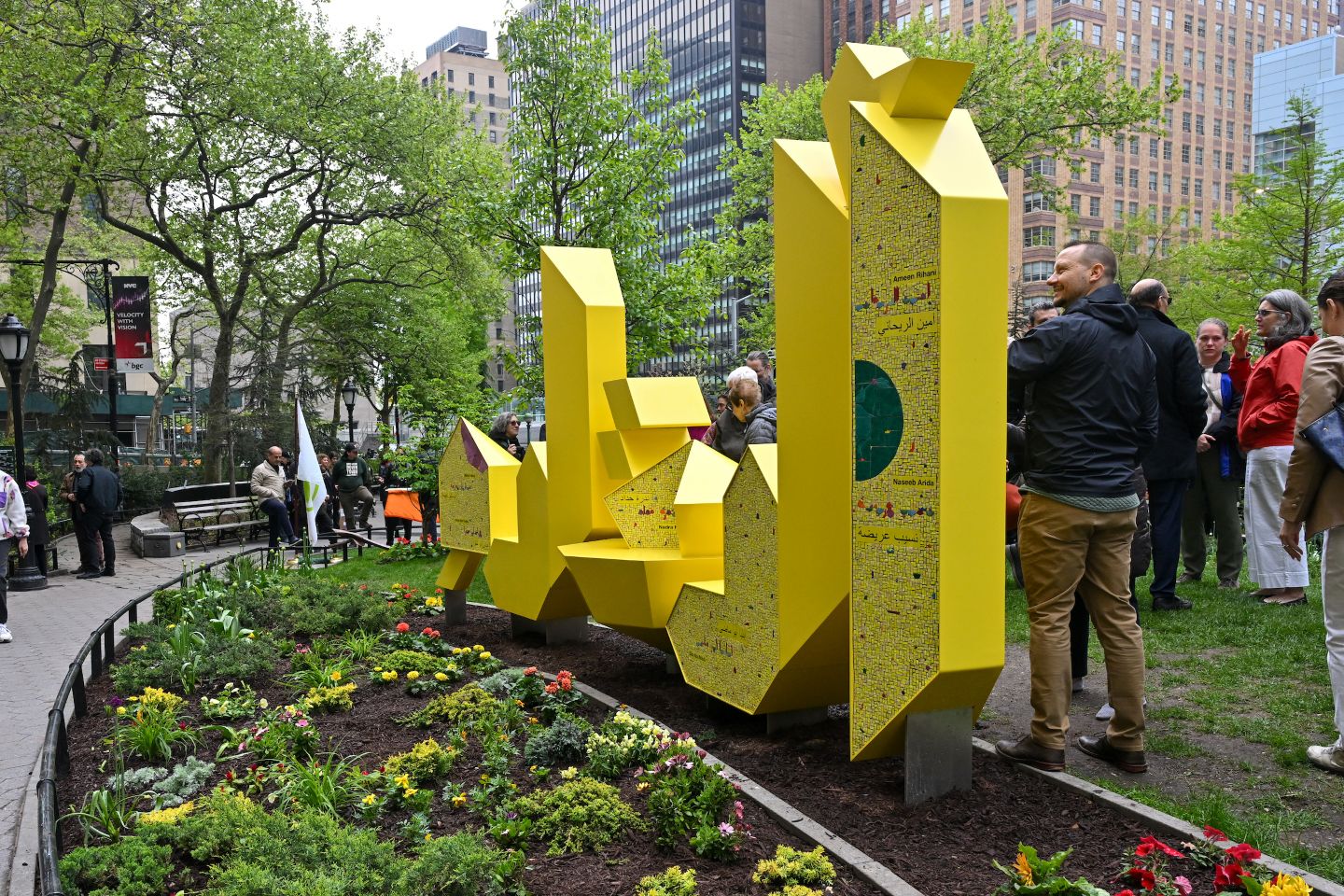
The work, “Al Qalam: Poets in the Park” by artist Sara Ouhaddou, features a central sculpture depicting the word al qalam — the pen — in an abstract calligraphy and mosaic panels celebrating the community’s literary legacy (see below). On hand to dedicate it were Councilman Chris Marte and NYC Parks Commissioner Tricia Shimamura, among others.
The tenements of “Little Syria” on lower Washington Street were razed in 1946 to make way for the Brooklyn-Battery Tunnel. (Only three buildings were spared, 105-109 Washington; 105 is now an 84-bed Safe Haven shelter and 109 had the restaurant Schilling for the past decade.)
From Wikipedia: The name for the neighborhood came from the Arabic-speaking Christian population that emigrated from Ottoman Syria, an area which today includes the nations of Lebanon, Syria, Jordan, Israel and Palestine. It became the center of New York’s first community of Arabic-speaking immigrants, though it was never exclusively Syrian or Arab — there were also many Irish, German, Slavic and Scandinavian immigrant families there when the Syrians first arrived. The Washington Street Historical Society estimates that there were 1500 Syrians in the city in 1900.
The community produced several magazines and newspapers as well as a local writers’ association: al Rabitah al Qalamiyah (“The Pen Bond”), founded in 1916, which played an important role in the literary renaissance in the Middle East by creating innovative forms of Arabic literature. Writers that emerged from this period include Gibran Kahlil Gibran, Nasib Arida, Rashid Ayoub, Abdul Massih Haddad, Nudra Haddad, Elia Abu Madi and Mikhail Naimy.
Punctuating the surface of the sculpture are the names of nine writers of the Little Syria community, also transliterated into the artist’s abstract alphabet.
The neighborhood declined as people began moving out to other areas — Brooklyn Heights, Sunset Park and Bay Ridge — and shops relocated to Atlantic Avenue. But it disappeared almost entirely when lower Washington Street was demolished to make way for the entrance ramps to the Brooklyn-Battery Tunnel.
2 Comments
Comment:
Medium rectangle #1 (top)
Right column rectangle ads


Mega rectangle

Restaurant guide icon
This is really cool. I always thought it was the WTC construction that displaced Little Syria, so interested to learn about the BBT angle.
The Atlantic Avenue stretch from Court Street down to Hicks still has a great collection of the older Arab businesses. Sahadis, of course, but also Damascus Bakery, Yemen Cafe, Malko Brothers, etc.
Complemented by some (not so) newcomers as well: Al-Badawi, Boutros, Diljān (though this is Afghan). The 4/5 or 2/3 to Borough Hall, or R to Court makes for an easy trip!
Relatedly, there is a Little Syria walking tour with Asad Dandia of New York Narratives and sponsored by ArteEast this Saturday at 11. In lieu of posting a link, it’s easily googleable for anyone interested.