


Left rectangle ads redesigned


History of Tribeca Buildings

The neighborhood’s camera infrastructure
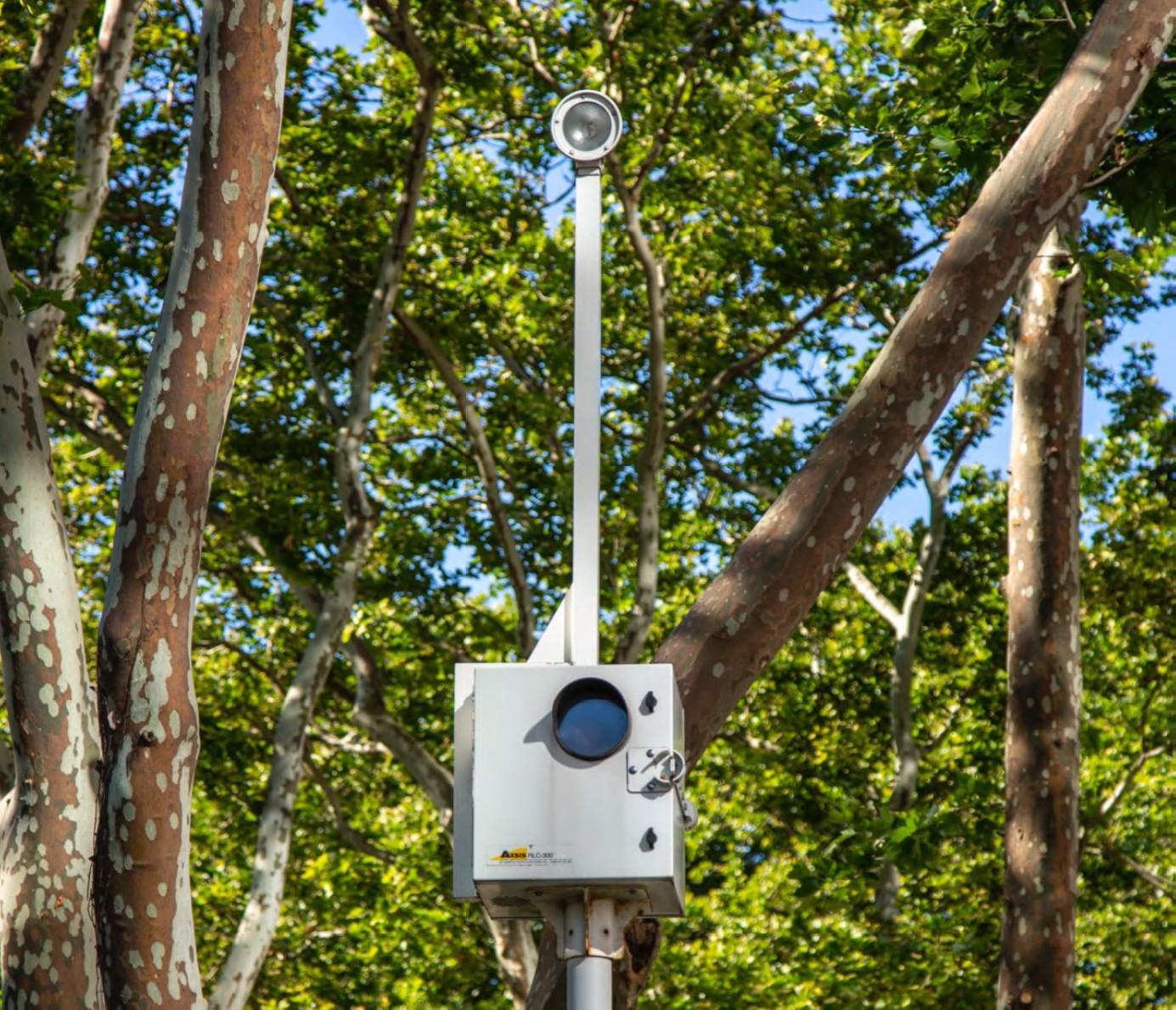
NYC DOT image
The mayor’s office sent around a press release announcing that they have installed several hundred red light cameras — up to 600, the maximum allowed in the city. The fines are $50 — I got one years ago right where the elevated Henry Hudson Parkway goes to grade at 59th Street, and I will tell you they work. City DOT’s data confirms it.
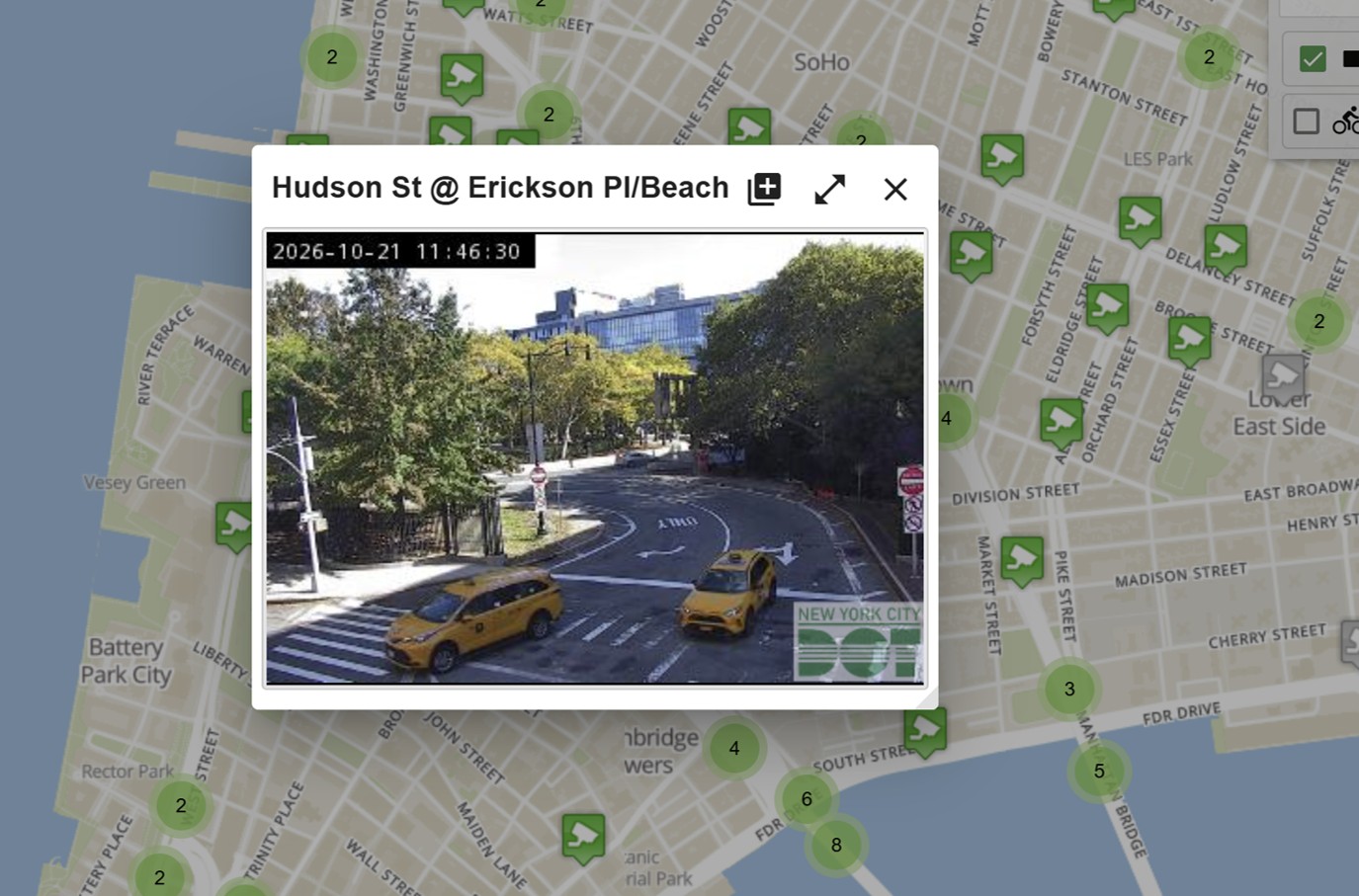
I have yet to get a list of locations — and I might not, and in fact to date Manhattan has the fewest cameras — though the cameras look like the ones above; the intersections are not signed. But I did come across (and I think J. mentioned this before) the live cameras stationed around the neighborhood. The link is here; click on the icon to see the real-time images.
So back to the red light cameras: The program was initiated in 1994, during the Dinkins administration, when the state allowed for 150 cameras — about 1 percent of the city’s 13,700 intersections. This was the nation’s first red-light camera program. The Adams administration then requested an expansion, which the governor granted in 2024 — 30 years later. That gets us up to the 600 cameras now being installed.
And since we’ve been talking about speed limits, NB that the speed limit below Canal is now 20 mph. And the speed-camera program is much more robust: as of 2023, there were over 2,200 cameras operational in the city, and after there was an increase in speeding and fatalities during covid, the state granted authorization for speed camera violations to be issued 24 hours a day, seven days a week at all camera locations. These seem to work too:
The key findings for 2023:
• Daily violations at speed camera locations have decreased 94 percent since the start of the program in 2014.
• 74 percent of vehicles that receive violations receive no more than one or two per year.
• Locations with cameras installed in 2022 showed 14 percent fewer injuries and fatalities between 2021 and 2023 compared to control corridors without cameras.
• Violations in the overnight and weekend hours decreased 40 percent in the two years since August 2022 when these expanded hours first went into effect.
• Following the expansion to overnight and weekend enforcement, locations with speed cameras saw 9 percent fewer injuries compared to control locations without cameras during the overnight and weekend hours.
1 Comment
Comment:
Medium rectangle #1 (top)

Right column rectangle ads


Mega rectangle

Restaurant guide icon


I’m all for it.